
In 2022, while jogging through a treadmill simulation of Heartbreak Hill — the Boston Marathon’s most challenging stretch — Katie Farrell remembers thinking how incredible it would be to run the full race someday.
“I really believe in the treatment at McLean and wanted to give back. If I can help even just one person access treatment, I want to do that.”
At the time, she didn’t consider herself much of a runner. But as part of her treatment program for borderline personality disorder (BPD) at McLean Hospital, she found herself running in the gym four times a week. What began as a way to manage anxiety soon turned into something so much more.
Now, nearly a year after completing treatment, Katie is returning to Boston to run the marathon in support of McLean, the place she says changed her life.
Reaching a Breaking Point
During her first year of college, Katie remembers feeling very alone. “I didn’t understand how other people seemed to connect so well with each other,” she says. “I felt like there was something wrong or different about me because I was having a hard time making friends.”

Seeking answers about why she felt this way, Katie was voluntarily hospitalized and ultimately diagnosed with BPD — a complex condition characterized by unstable moods, difficulties in relationships, and challenges with self-image and emotional regulation.
But even though the diagnosis provided clarity, it didn’t provide relief. “It was a double-edged sword,” Katie says. “I finally knew what I was up against. But at the time, a lot of people viewed it as untreatable, which really scared me.”
Over the next few years, Katie was in and out of treatment centers, but nowhere provided meaningful improvement. She also transferred to a different college, hoping that a change in environment would be beneficial. Instead, it brought new challenges.
“Friendships became easier, but schoolwork became a lot harder,” she says. “I had a hard time keeping up in what felt like a very competitive environment, which hurt my confidence. I was so paralyzed to turn in anything I was working on — just terrified of failing.”
As Katie’s stress mounted, she started experiencing psychosomatic symptoms, which occur when psychological distress manifests in physical illness or pain. She reached a breaking point when the graduate programs she had applied to rejected her applications. Crushed and overwhelmed, Katie withdrew from school.
“I didn’t know what to do without that dream, and I felt really directionless and not like myself. I couldn’t even physically hold a pencil anymore,” she says. “At that point in my life, I was desperate for anything that would help.”
Finding Hope Again
In summer 2022, Katie applied to and entered McLean’s Gunderson Residence, an intensive program for people with BPD focused on healing and long-term growth rather than just symptom management. After everything she had been through, though, Katie remembers feeling hopeless when she first arrived. “I was very closed off,” she says. “By then, I had gone through something like 14 treatment centers and 11 hospitalizations.”
That feeling started to change when Katie met with her therapist, Brandon Unruh, MD, medical director of the Gunderson Residence.
“He was telling me about all the work that the treatment center had done, and I started crying for the first time in a long time. I told him that I didn’t want to hope anymore,” Katie says. “And then, he started tearing up, too. When I had said things like that before, people went straight to problem-solving and saying that it would get better. So, it meant a lot to me that he was willing to just sit with me in that moment.”
Katie’s meetings with Unruh marked a real turning point in how she saw herself. “His patience and willingness to meet me with whatever I was feeling really changed my life,” she says. “He helped normalize all these big emotions that I felt made me so different from other people.”
During Katie’s treatment, her care team made it clear they viewed BPD as treatable, which helped motivate her to keep going. With their encouragement, she also started to see herself as someone capable of being a friend and having long-term relationships.
“At the end of my treatment, they did another evaluation, and my hopefulness was at the highest level on the scale,” she says. “Finding those sources of hope, whatever they are, is so important.”
Building Momentum
For Katie, one of the most impactful skills she learned at McLean was how to take care of herself, and running quickly became a cornerstone of that practice.
“While at McLean, I realized that if I wanted to keep the things in my life that I love, then I needed to prioritize myself first,” she says. “Running helps with that and provides a sort of symbiotic structure for me. It’s where I’ve carved out time for myself, and it also helps me keep the things I love in my life.”
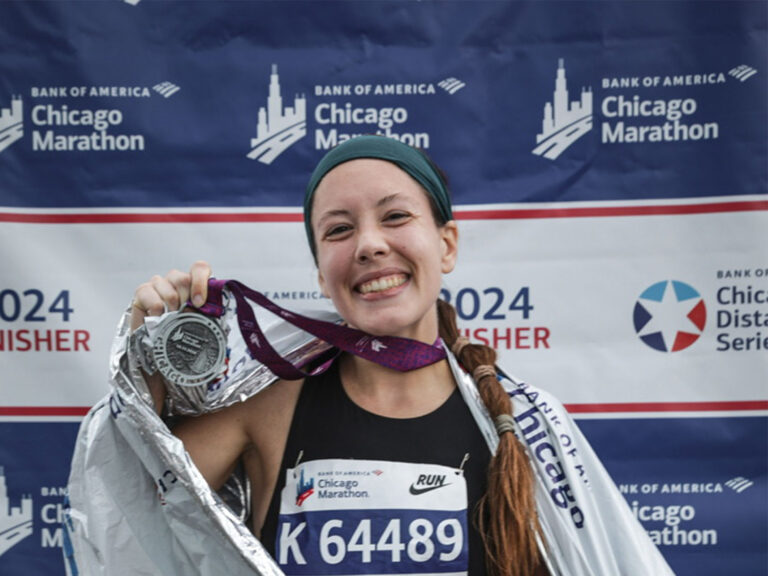
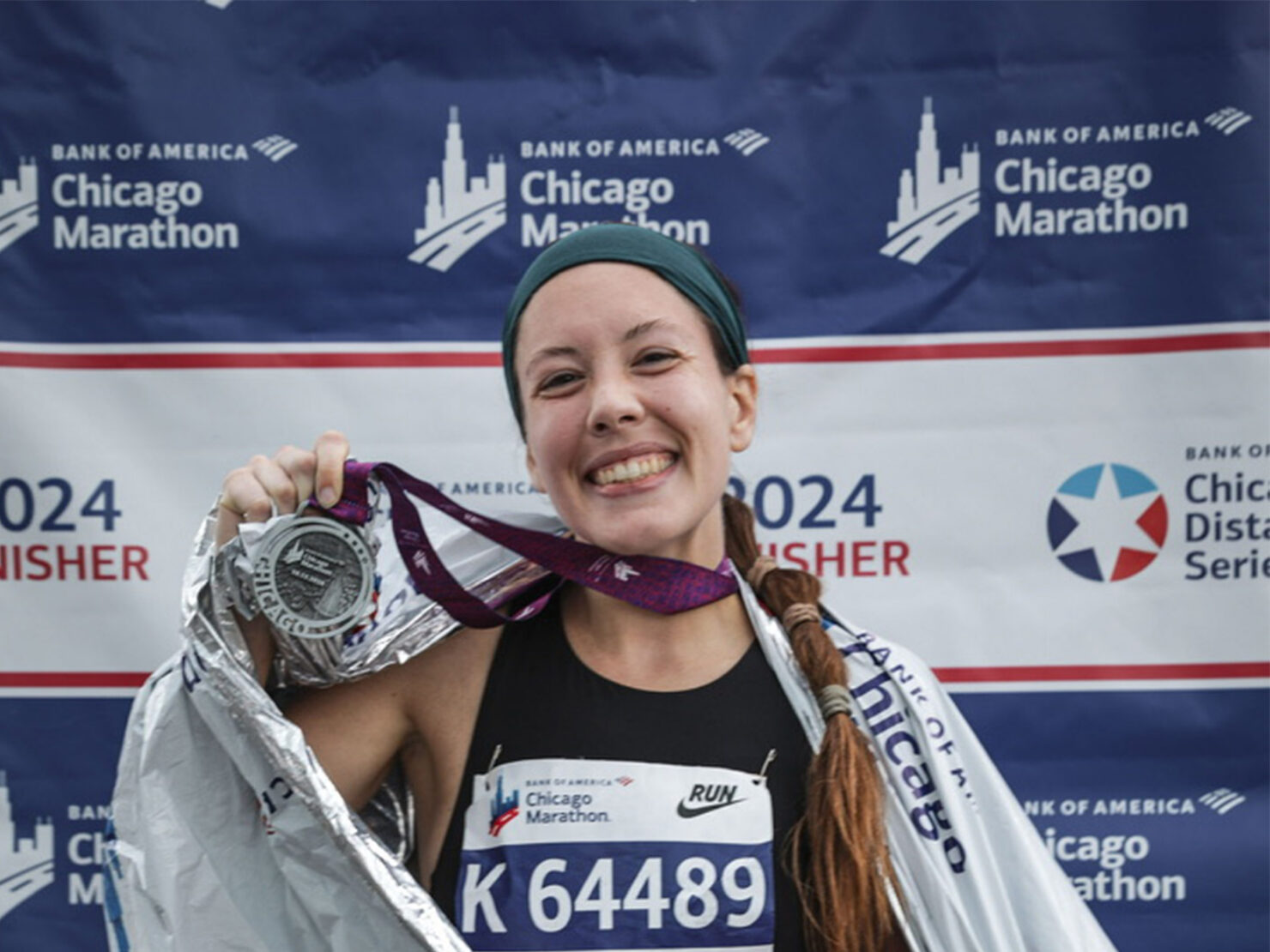
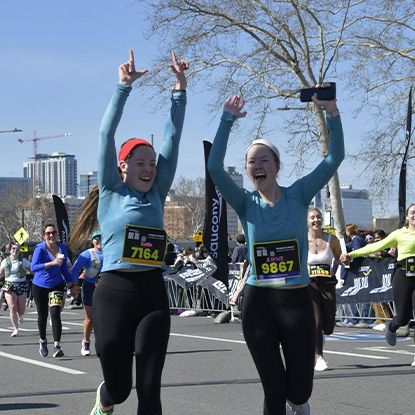
Since she started running, Katie has completed three marathons. Now, as she gears up for her fourth, she sees running for the place that helped transform her life, in a city that now means so much to her, as the perfect way to pay it forward.
“I really believe in the treatment at McLean and wanted to give back. If I can help even just one person access treatment, I want to do that,” she says.
The Boston Marathon isn’t the only feat Katie will be accomplishing this spring. In May, she will also complete her college degree. She sees both milestones as testaments to the strong foundation and momentum she has built over the last four years.
“Crossing the finish line and walking the graduation stage this year are such full-circle moments for me that felt completely out of reach when I first went into treatment. I never thought I would feel in charge of my own life, and I often felt like I didn’t even deserve to get better,” Katie says. “Now, I have these pillars of running and a great community that I didn’t have before that make me more willing to take risks and keep going. I want anyone who is struggling, especially in the ways I’m familiar with, to know that I believe in you, and I hope that you can believe in you, too.”
To support Katie’s fundraiser for McLean, click here.