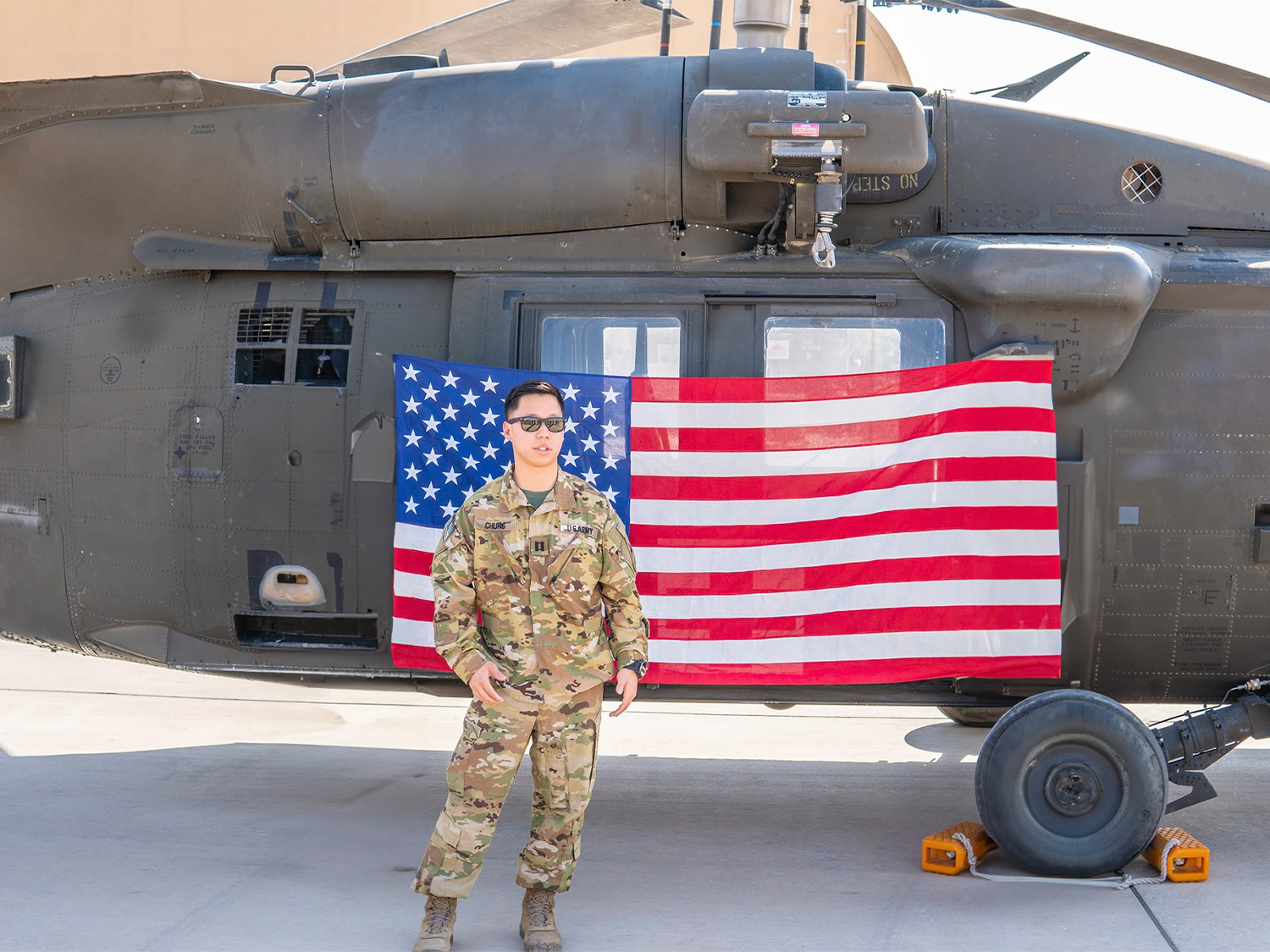
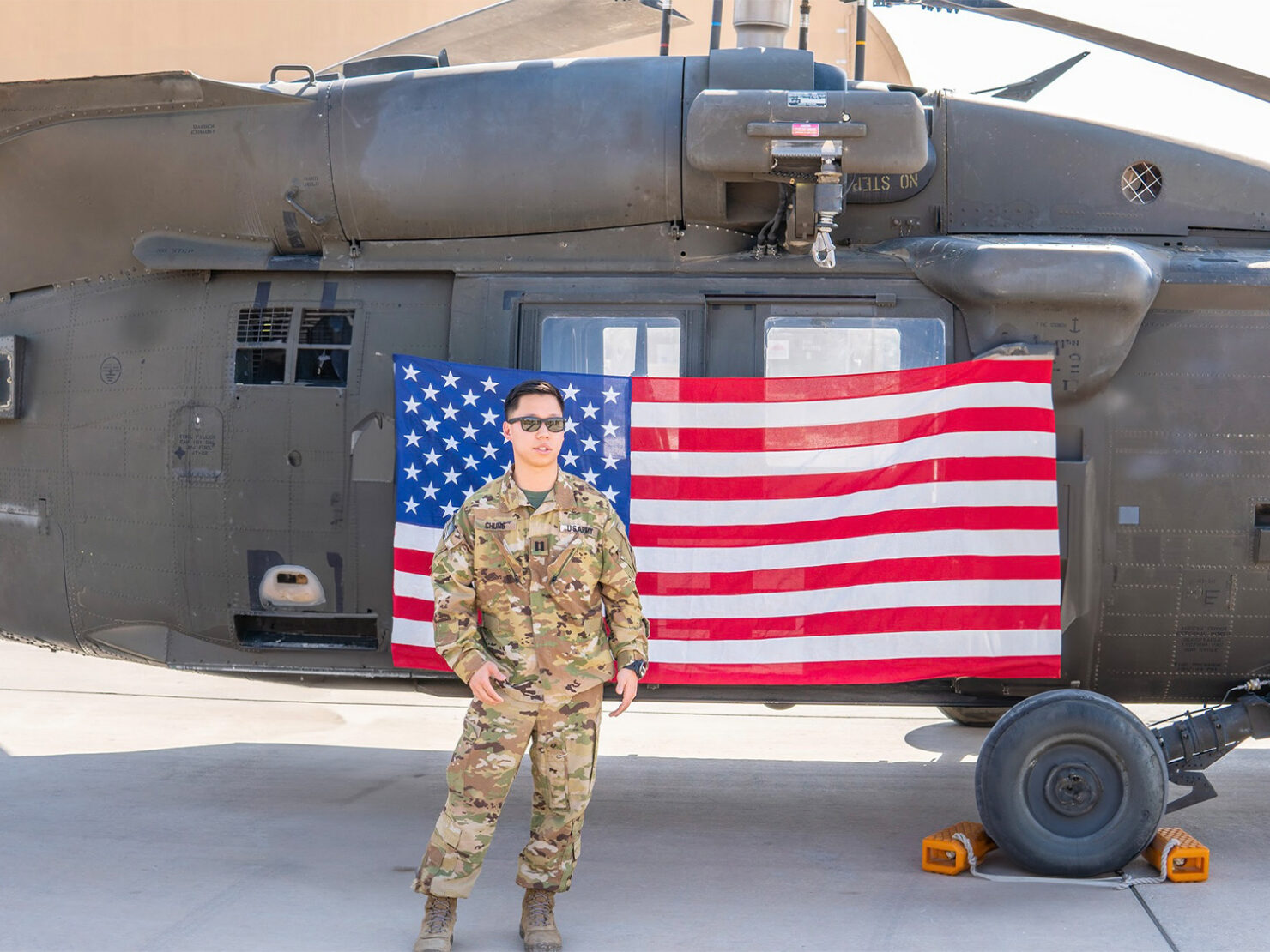
For former medical evacuation pilot Will Chung, life in the military was a matter of sinking or swimming. “The military puts a lot of responsibility on young people,” he says. “It’s designed so you either sink, or swim. It rewards people who can swim.”
Will commissioned into the U.S. Army through Virginia Tech’s Reserve Officers’ Training Corps (ROTC) program and spent eight years as a medevac pilot. When he left the military and returned to civilian life, he thought he was okay, that he could simply move on. But when a close mentor and fellow Veteran took his own life, Will reevaluated the price of not asking for help. “It made me question whether I was just suppressing things, and whether one day it would blow up, like a ticking time bomb,” he says. He reached out to Home Base — a national nonprofit dedicated to healing the invisible wounds of war for Veterans of all eras, Service Members, Military Families, and Families of the Fallen through world-class, direct clinical care, wellness, education, and research — and began seeing a therapist weekly. “It’s no exaggeration to say that Home Base has saved my life,” he says.
Now, Will is running the Boston Marathon and fundraising for the very program that has given so much to him. “Healthcare in the U.S. is expensive, but Home Base is free,” he says. “Participants don’t pay anything. That money comes from philanthropy, partnerships, and fundraising. Contributing in this way feels like a small way to give back.”
Learning to Compartmentalize
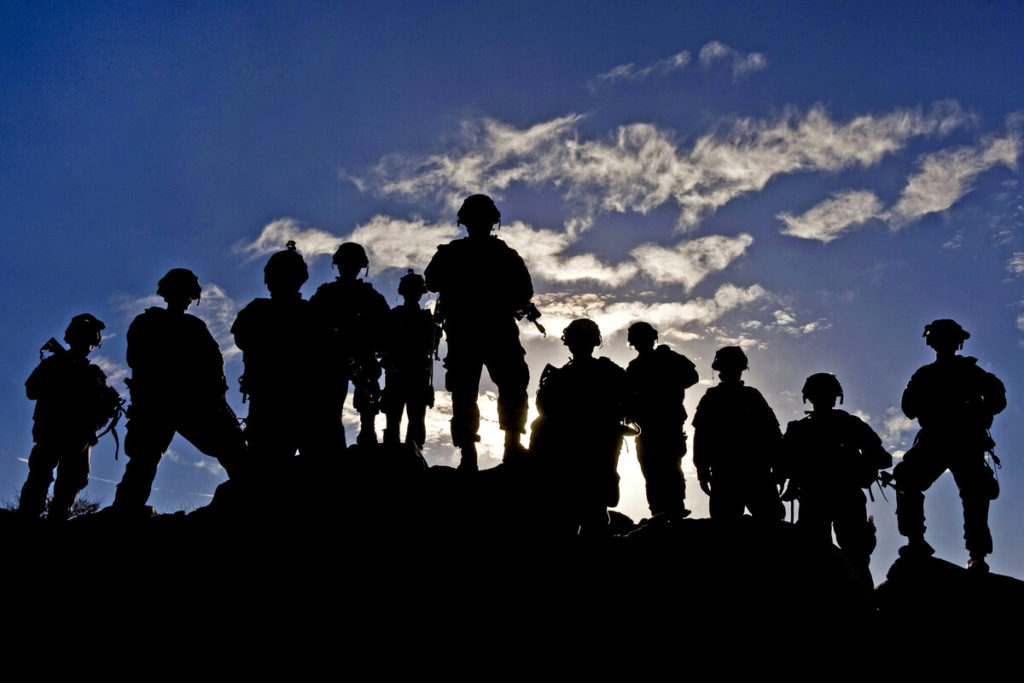
As a medevac pilot deployed to Afghanistan, Will was tasked with flying a Black Hawk helicopter into chaotic, dangerous, violent combat situations to rescue fellow soldiers.
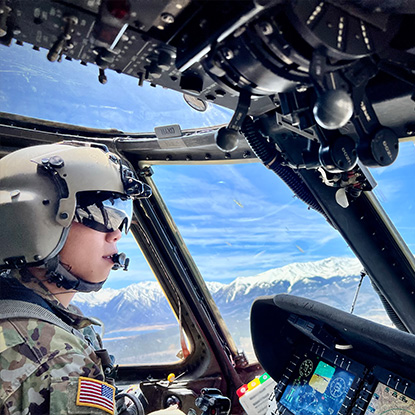
“To function, you have to compartmentalize,” he says. “If you don’t develop that skill, you’re going to sink. I saw people who couldn’t process everything. There’s a lot of good in the military, but there’s also a lot that’s heavy.”
So, Will learned to compartmentalize, to process the things he experienced out of necessity and survival. But he also realized everyone has a breaking point. “I used to have a cynical view of mental health care. I thought I was fine. Having that space at Home Base allowed me to express what was really going on,” he says. “A lot of the things I thought were ‘normal,’ my therapist would challenge and explain why they weren’t.”
For Will, the Veteran community he’s found in Boston and through Home Base, a program founded by Massachusetts General Hospital in partnership with the Red Sox Foundation, has been integral to his healing process and connects him to one of the primary reasons he joined the military in the first place — a search for community and acceptance.
“Growing up, I struggled with being comfortable in my own skin and appreciating my culture as a Korean American,” Will says. “In high school, I thought if I did ROTC and commissioned into the military, maybe that would help me assimilate into American culture, because military service feels like a very American thing to do. And at the end of the day, no matter what happens, military service is something no one can take away from you.” Will has found that the military community is there for life — the best man at his upcoming wedding will be a friend he met in Army flight school — and that community is strengthened by resources like Home Base.
“There was a moment where one of my former soldiers died by suicide the night before a scheduled counseling session at Home Base,” Will recalls. “It felt surreal. Having someone to process that with immediately made a huge difference.”
Running to Raise Funds and Break Stigma
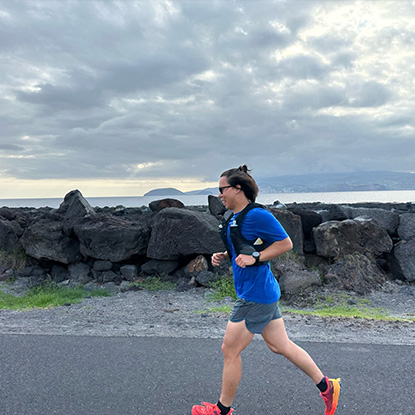
Will is running and fundraising for Home Base to pay his experience forward and to help other men and women fighting the same battles. Reaching out to Home Base was an action Will took inspired by the struggles and perseverance of fellow Veterans, and he hopes sharing his story will have that same effect on others.
“I think being vulnerable and telling my story matters. I don’t post much on social media. Most people probably see me as a goofy, happy guy. If I speak up, maybe it makes someone think twice,” Will says. “If someone looks at me and thinks everything is fine, but then hears me talk about this, maybe they’ll reconsider assumptions they make about other Veterans.”
As Will has spent time at Home Base, he’s come to understand further how significant the epidemic of Veteran suicide is. “I know too many people who have died by suicide,” he says. “Statistically, more Veterans have died by suicide since 9/11 than in combat zones. That’s staggering.”
“A friend told me your brain is like a muscle. If you want your legs to get stronger, you go to the gym. You train them. Your brain is the same way,” Will says. Taking on this year’s Boston Marathon, and helping to fund care for fellow Veterans at Home Base, Will is training not only his legs, but his brain too, and hoping he’ll encourage other Veterans to take the same steps towards healing. “Even if I affect just one person, that’s enough.”
To support Will’s Boston Marathon for Home Base fundraiser, click here.