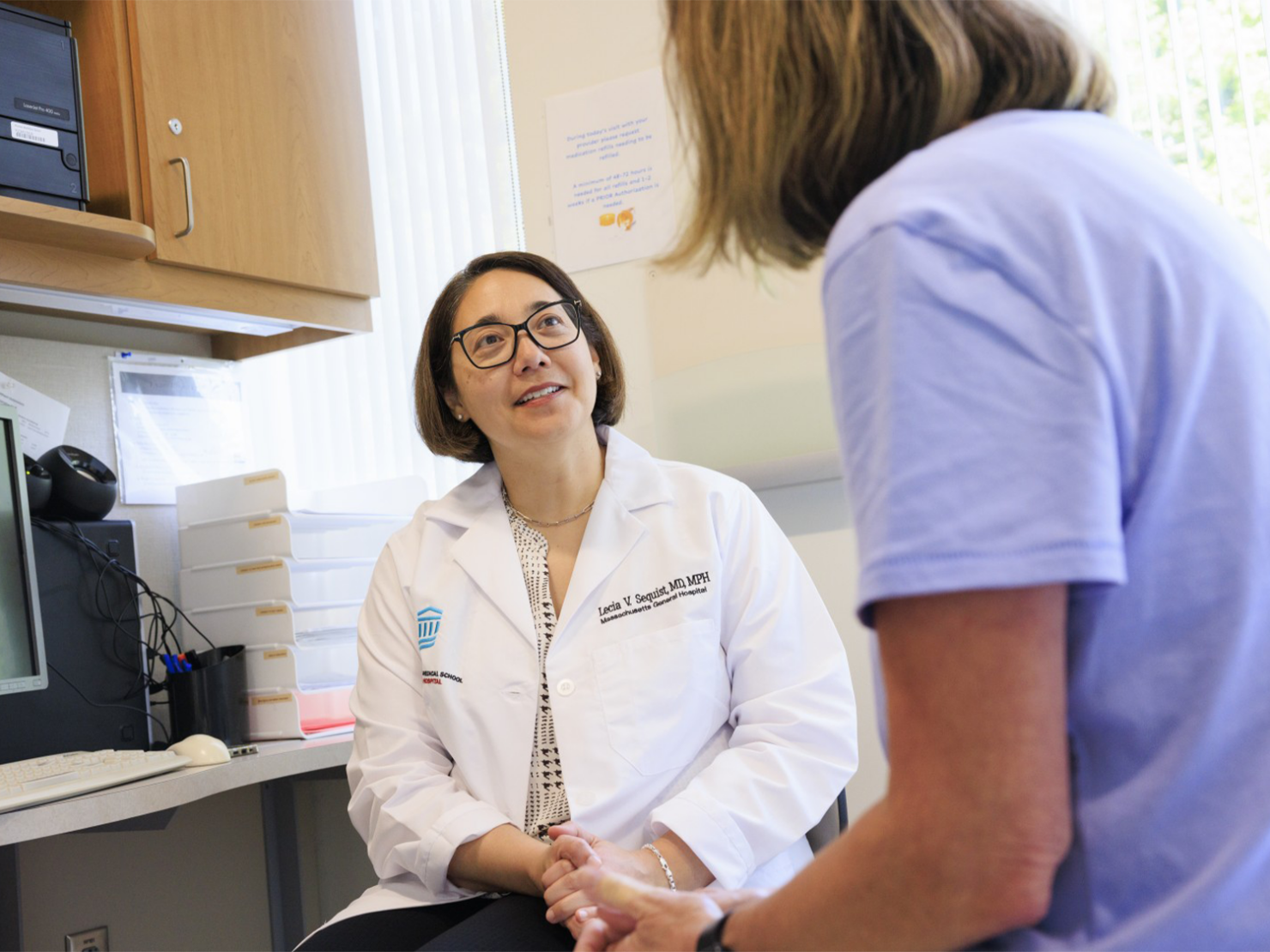
When David Ryan, MD, president of Mass General Brigham Cancer Institute, gazes into the future of cancer care, he sees it taking shape right here, right now.
Imagine, he says, a 50-year-old man visits his primary care provider, whose computer displays a notification — based on a machine learning algorithm — that this patient has a 50-fold increased risk of developing pancreatic cancer in the next five years.
Today, pancreatic cancer is regarded as a silent killer, typically going undetected until its more deadly advanced stage. But that narrative is upended in Ryan’s vision of the future, which he shared during a panel discussion at the 2025 World Medical Innovation Forum.
“Early detection and cell therapy — tools that were once only pipe dreams of oncologists in the past — are active programs at Mass General Brigham Cancer Institute. One can see that the future is bright for cancer care.”
The patient undergoes a blood test that screens for multiple types of cancer based on the presence of extremely specific genetic markers and proteins. He tests positive for pancreatic cancer and soon enrolls in a research study that uses a highly sensitive imaging agent to identify a tiny but eventually lethal tumor, just three millimeters, on the tail of the pancreas. The patient has robotic surgery to remove the tumor and is discharged from the hospital two days later.
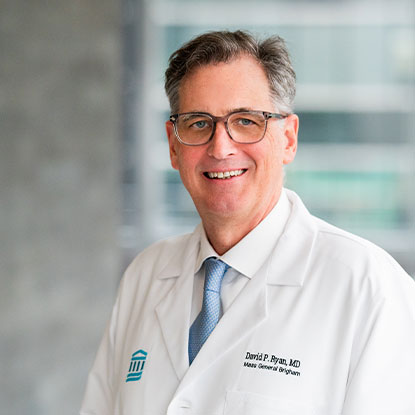
“The punchline is that person never meets me in my oncology clinic and never dies from pancreatic cancer at 55 like they would today,” says Ryan, who specializes in the disease. “All of these technologies exist today in nascent forms. We’ve seen the future.”
‘Just around the corner’
As a powerhouse of discovery and innovation, Mass General Brigham Cancer Institute clinicians and researchers work as one to develop, test, and fine-tune tools and technologies that will transform cancer care.
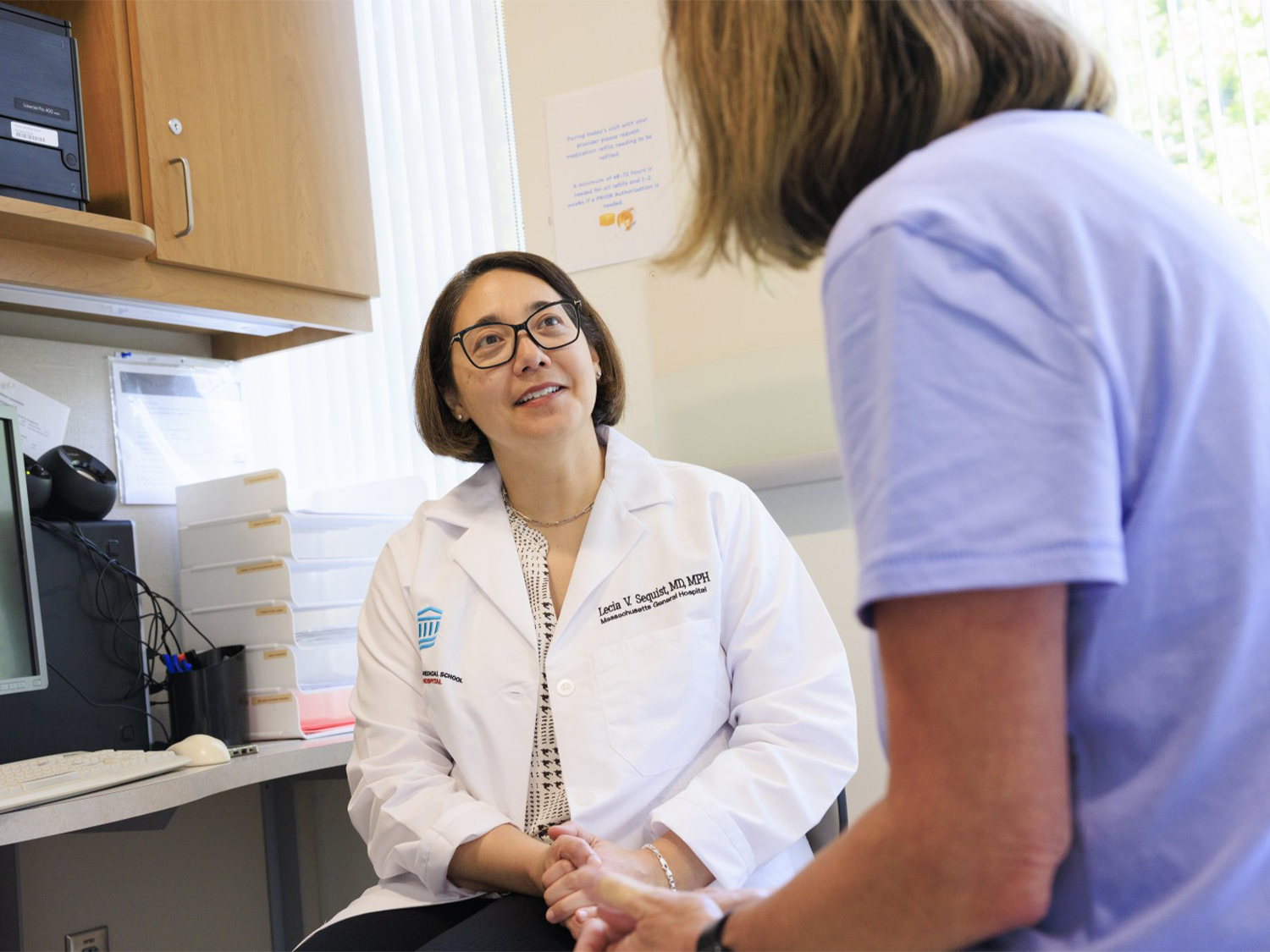
Oncologist Lecia Sequist, MD, MPH, sees it every day in her role as director of the Cancer Early Detection and Diagnostics Program at the institute. Sequist and her team have collaborated with engineers at Massachusetts Institute of Technology to develop an artificial intelligence tool that can accurately predict lung cancer risk, even before it can be seen on a high-resolution scan.
Reflecting on Ryan’s description of a patient encounter in the future, Sequist says, “This is a hopeful story and one I don’t think is far-fetched. It is really just around the corner for us.”
Launched in 2023, the Cancer Early Detection and Diagnostics Program offers cancer risk-assessment consultations. A key part of this work is germline genetic testing, which uses blood samples to look for cancer-related genetic mutations inherited from a parent.
“We’ve been surprised at the high level of germline mutations we’ve seen in what you would think of as a healthy population,” Sequist says. “The literature out there suggests about 1% of us walk around carrying one of those germline mutations, and we’ve found consistently now over a couple of years that 11% of our patients are positive. I think the testing was so limited in the past that we didn’t fully understand the scope of the problem.”
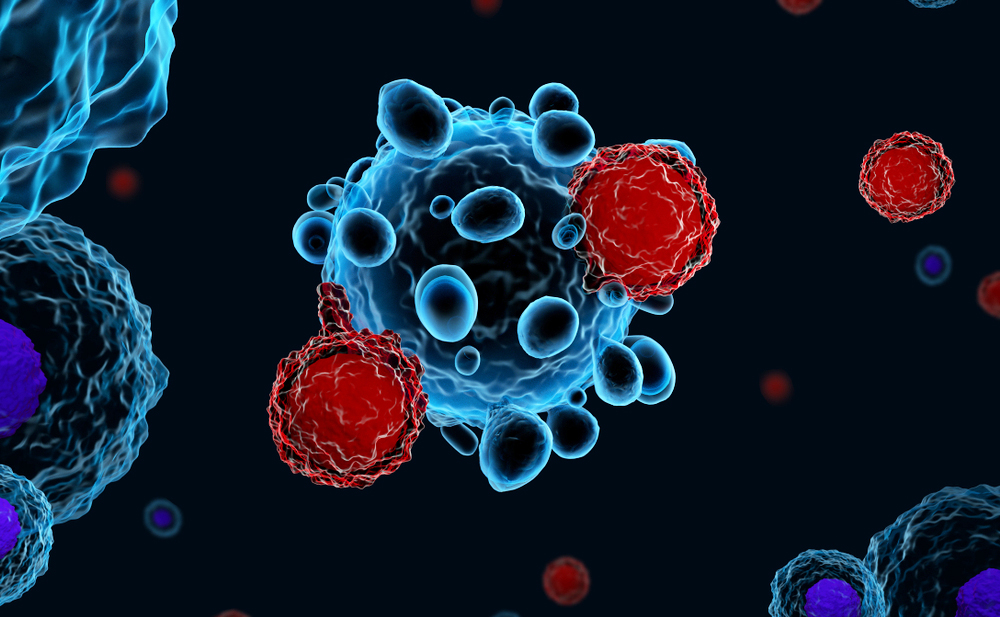
Recent advances in cell therapy — in which specific cell types or modified cells are transferred into the body to treat a disease — are also supercharging innovation in cancer care.
Yi-Bin Chen, MD, division chief of malignant hematology at Mass General Brigham Cancer Institute, explains how early use of gene editing in cell therapy focused on programming the cells with a target destination. Now, the technology has advanced such that cells can also be programmed to perform more complex behaviors, such as secreting substances to make their activity more effective or the surrounding environment less immunosuppressive.
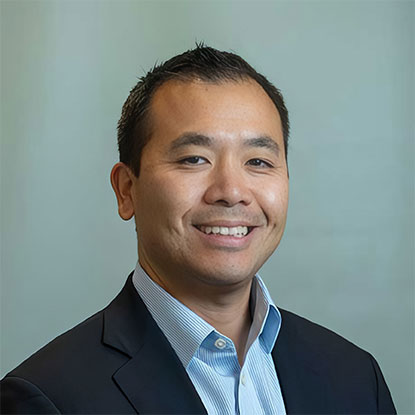
“It has revolutionized how we think about cellular therapy,” Chen says.
This new era is already unfolding at the institute. In 2024, a multidisciplinary team of researchers, oncologists, and neurosurgeons published their results from a phase 1 clinical trial illustrating a new approach to CAR T-cell therapy for glioblastoma. Just days after a single treatment, patients experienced dramatic reductions in their tumors, with one patient achieving near-complete tumor regression.
“Right now, most of the commercial standard-of-care cell therapy is approved for blood cancers, but with this success and other evidence, we’re able to think about moving into not just solid tumors but a whole lineup of non-oncology conditions to start testing as well,” Chen says. “To use cells as a living drug to modify those effects — that’s going to be really powerful.”
The need for scalable systems of care
Although the technologies to transform cancer care are no longer science fiction, healthcare still faces real-world constraints to making them a reality today.
“Most of the cell therapies we use now are individual, meaning they’re one-off drugs made for each patient,” Chen says. “You can understand how much effort and cost that takes from a manufacturing point of view and the subsequent expense that is to the patient and healthcare system in general. That approach is probably not sustainable.”
Meanwhile, early detection has the inverse challenge. Companies now market multi-cancer, early-detection blood tests directly to consumers. These tests expand access but also present new challenges when patients bring their results to their annual checkup.
“Primary care offices are not set up to counsel about cancer genetic tests and the different vendors providing these tests,” Sequist says. “The hardest part is interpreting the results, which come back with a lot of gene names. We’ve found that primary care doctors are excited to partner with us because, as oncologists, we have more familiarity with cancer genetics.”
Despite all these challenges, Chen says, the rapid pace of innovation gives him hope that they can be overcome.
“Early detection and cell therapy — tools that were once only pipe dreams of oncologists in the past — are active programs at Mass General Brigham Cancer Institute,” he says. “One can see that the future is bright for cancer care.”
To learn how you can support care and research at Mass General Brigham Cancer Institute, contact Megan Daniels at medaniels@mgb.org.