The idea was born at the coffee machine: They would create a new method of making “sticky” drugs to target a set of cancer genes widely believed to be undruggable. As cancer biologists working from Mass General Brigham’s Charlestown Navy Yard campus, Liron Bar-Peled, PhD, and Chris Ott, PhD, knew they were on to something that could have a seismic impact on cancer therapy — but they also knew that cancer drug discovery is a famously slow and arduous process.
“In the moonshot terminology, our rocket was on the platform — what we needed was fuel,” Bar-Peled says.
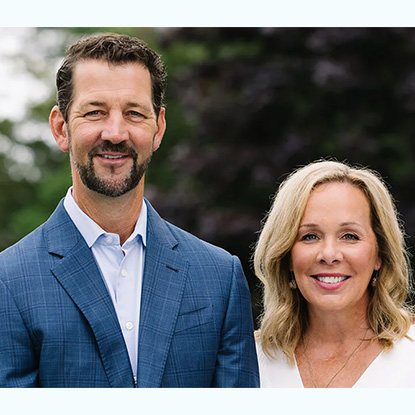
Enter Jason and Keely Krantz. In 2023, as part of their landmark gift to Mass General Brigham Cancer Institute, the Krantzes established an annual award competition to help cancer researchers pursue their most innovative ideas. Bar-Peled, Ott, and their computational colleague Michael Lawrence, PhD, received the inaugural Krantz Quantum Award — the largest and most prestigious of the awards.
Two years and $2 million in Quantum Award funding later, “protein superglue” — the drug technology the team is developing with the help of pathologist John Iafrate, MD, PhD — is showing great promise in cancer and other diseases.
“The Krantz Quantum Award enabled us to build the team that we needed to change the paradigm for developing new drugs for patients with cancer,” Bar-Peled says.
Awarding innovation
With three years of Krantz Awards now complete, the program continues to recognize and reward the Cancer Institute’s most trailblazing and visionary research efforts. In December, the Krantz Family Center for Cancer Research announced the latest award recipients, who share a combined $6 million in funding. This latest class of awardees reflects the Krantz Center’s ongoing commitment to supporting cutting-edge research with the potential for clinical impact.
“Keely and I continue to be inspired by the exceptional work conducted by physicians and scientists across the Krantz Family Center for Cancer Research,” says Jason Krantz, founder and managing partner of Breachway Capital and founder and executive chairman of Definitive Healthcare. “We’re energized by the awardees and their cross-disciplinary collaborations designed with a common goal — to bring lifesaving therapies and diagnostics to patients everywhere as quickly as possible.”
The recipients were determined through a rigorous selection process, which included internal and external scientific review. The final decisions were based on the individual projects’ scientific merit and their potential to transform the understanding of cancer and to impact future cancer treatment.
Improving immune therapies
The 2025 Krantz Quantum Award was presented to a team led by Marcela Maus, MD, PhD; Matt Frigault, MD; and Rob Manguso, PhD — three of Mass General Brigham’s leading authorities in CAR T-cell therapy. This new, powerful form of immune therapy involves engineering a patient’s own T-cells in the lab to boost the body’s immune response to cancer. Less than a decade since receiving FDA approval, CAR T-cell therapy has had a revolutionary impact on the treatment of blood cancers like leukemia, lymphoma, and multiple myeloma. But it doesn’t work every time and hasn’t proven as effective in other forms of cancer. This award-winning team of experts has developed a method to determine which genes can make CAR T-cells more effective in laboratory models of specific cancers.
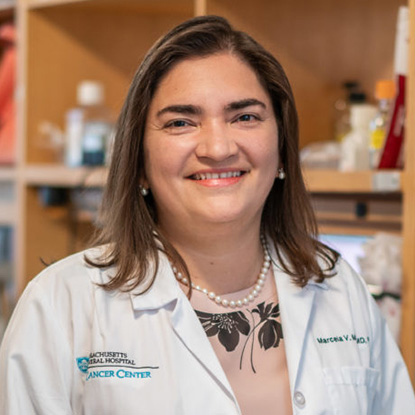
“Pancreatic cancer remains one of the most challenging types of solid tumor to treat,” says Maus, director of the Cancer Institute’s Cellular Immunotherapy Program. “If we are successful, the approach could lead to the development of specialized cell therapies for a wide range of other cancers.”
The 2024 Quantum Award winners were also focused on improving immune therapy. Immune checkpoint blockade (ICB) is a powerful method of activating the immune system to recognize and reject cancer cells as foreign invaders. But that power comes at a cost: Sometimes those newly activated immune cells also attack healthy organs, like the thyroid gland or the colon. The award-winning team — led by Alexandra-Chloe Villani, PhD; Lloyd Bod, PhD; Will Hwang, MD, PhD; and David Ting, MD — is trying to determine what makes certain immune cells attack cancer and others attack normal tissues. Their early results indicate there are differences between the immune cells that attack cancer and those that attack normal tissue, raising the hope that we can enhance the former while suppressing the latter.
“This is a key biological problem the field is facing, but because there isn’t an immediate benefit or a drug target to pursue, it can be hard to raise money for the research,” Villani says. “That’s what makes the recognition and funding through the Krantz Quantum Award so meaningful.”
Promising concepts, thought-provoking ideas
In addition to the Quantum Award, the Krantz Center provided several other significant scientific awards in 2025.
The following teams received Breakthrough Awards, which offer $1 million over two years to advance and accelerate promising scientific concepts in cancer research:
- Andrea McClatchey, PhD, and Nabeel Bardeesy, PhD, are collaborating on a project that aims to uncover how bile duct cancers originate and why some respond well to treatments while others do not, paving the way for more personalized therapies.
- Deb Sen, PhD; Andrew Elia, MD, PhD; and Daphne Haas-Kogan, MD, are exploring whether a drug affecting DNA damage response can reinvigorate exhausted T-cells in models of pediatric brain tumors. Their findings could open an entirely new way to boost the immune system’s ability to fight cancer.
- Konrad Hochedlinger, PhD; Hanno Hock, MD, PhD; and Peter van Galen, PhD, are working to uncover why a single key mutation in a chromosome component can lead to specific cancers, like lymphoma and leukemia. Their work could reveal fundamental cancer mechanisms with wide-reaching implications across blood cancers and solid tumors.
The following scientists received Spark Awards, which include $100,000 in funding per recipient:
- Mikolaj Slabicki, PhD, is working to develop a new technology that uses the cell’s own degradation pathways to break down cancer-causing genes.
- Raul Mostoslavsky, MD, PhD, is using spatial transcriptomics to study models of aging and aging-related cancers.
- John Iafrate, MD, PhD, and Liron Bar-Peled, PhD, are collaborating to design new chemistry to improve drugs targeting ALK-positive lung cancer.
- Avanish Mishra, PhD, and David Walt, PhD, are creating a diagnostic tool combining circulating tumor cells and digital protein assays to guide treatment decisions for antibody-drug conjugates.
- Moshe Sade-Feldman, PhD, and Meghan Mooradian, MD, are investigating whether freezing a single tumor (cryoablation) can activate the immune system and boost immunotherapy effectiveness in melanoma.
The Krantz Center also offers grants for advanced technologies. The Technology Award is funding a powerful computational infrastructure (graphics processing unit, or GPU) for AI-based cancer research.
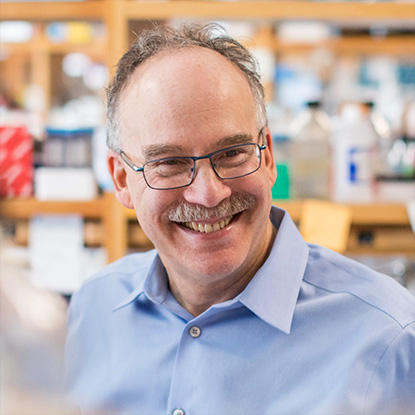
“The Krantz Awards are enabling our investigators and collaborators to chart new territory in cancer research,” says Daniel Haber, MD, PhD, director of the Krantz Family Center for Cancer Research and director emeritus of the Mass General Cancer Center. “The awardees are creating exceptional scientific and clinical partnerships with the goal of uncovering new and more effective ways to fight cancer.”
To learn more about how you can support the Krantz Family Center for Cancer Research, please contact Bob O’Brien at rhobrien@mgb.org.