When it comes to mental health, demand for care outpaces capacity.
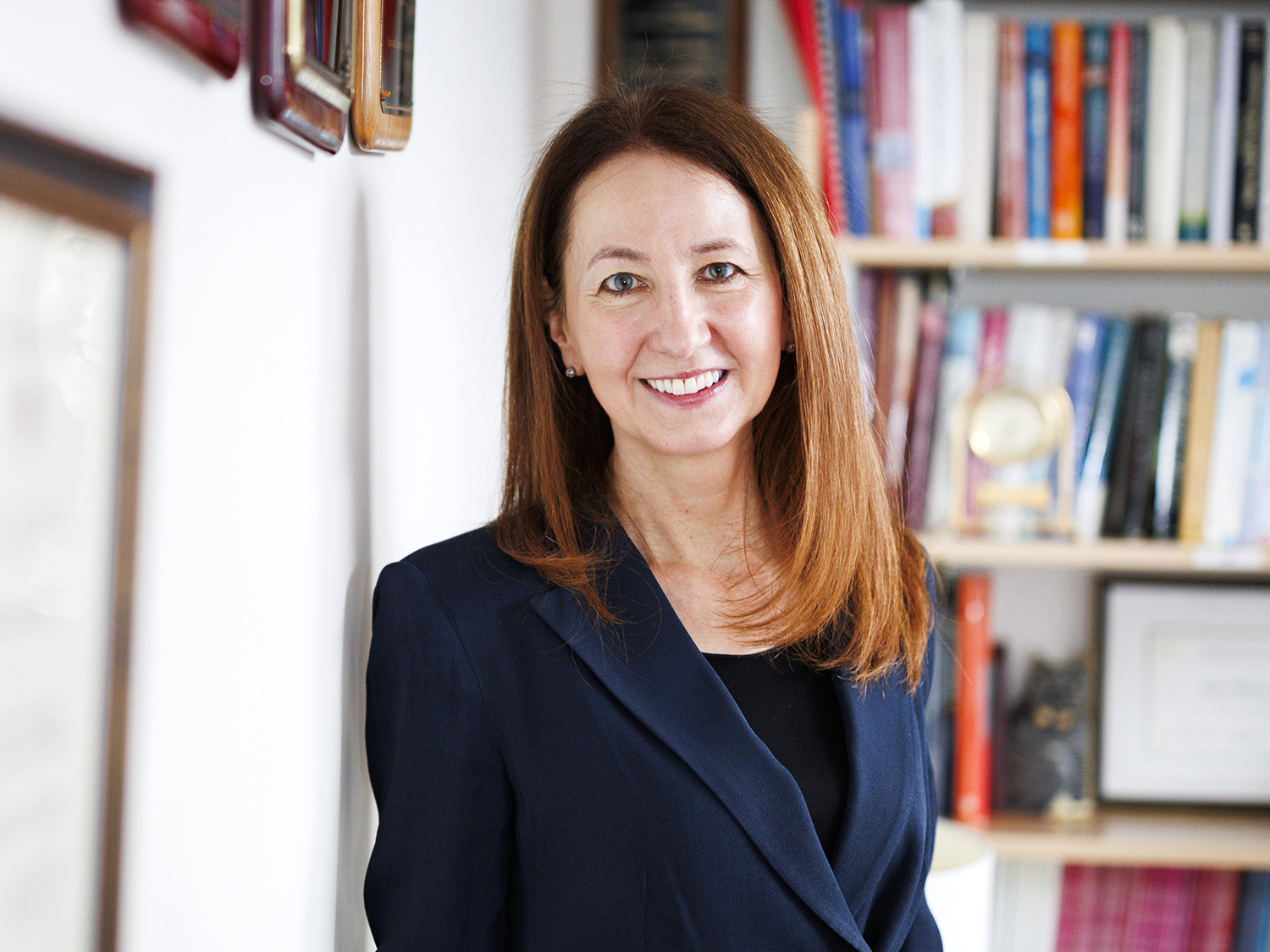
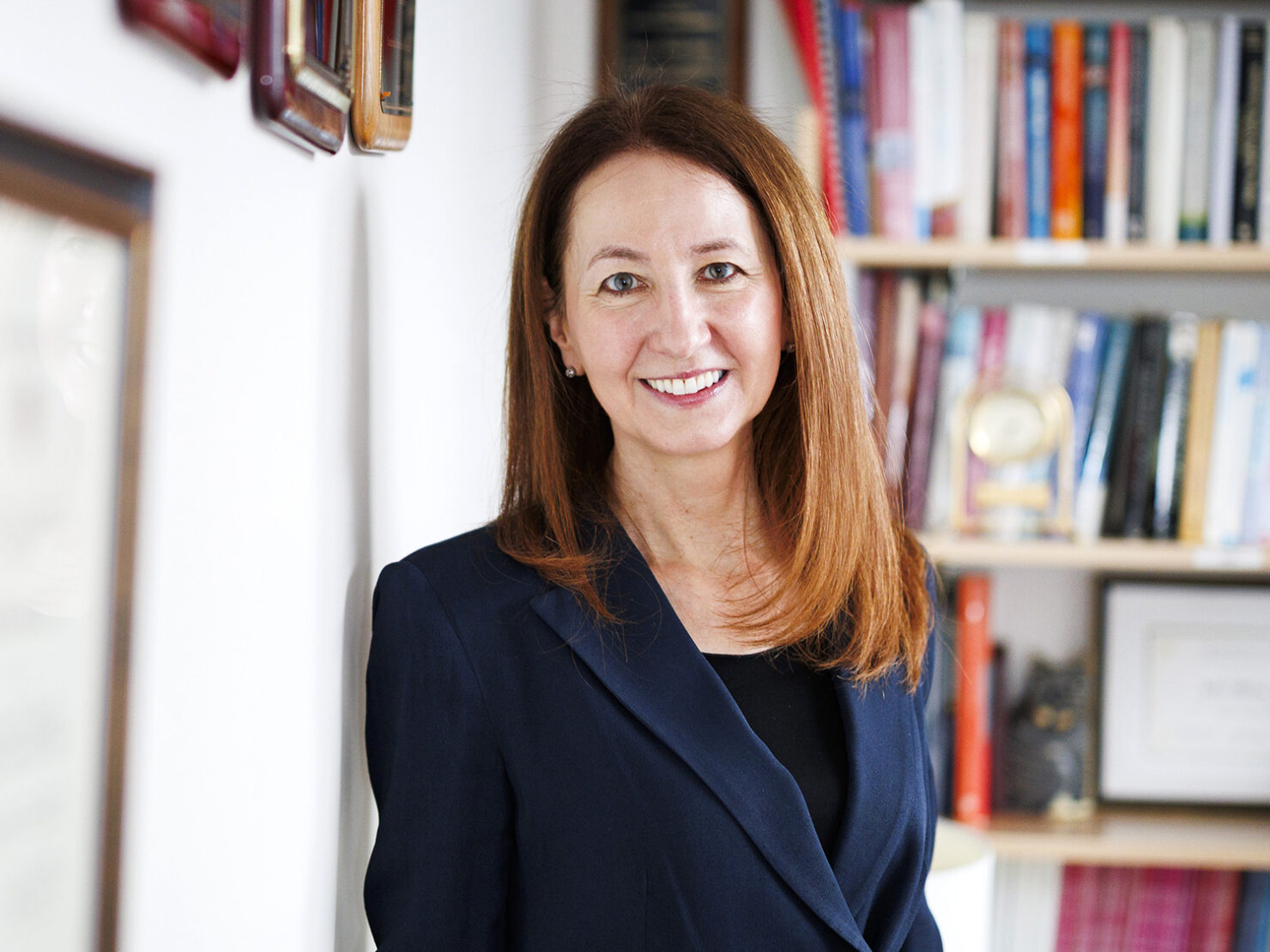
“We are facing a major crisis,” says Sabine Wilhelm, PhD, chief of psychology at Mass General Brigham and the Donovan-Chien Family Professor in the Field of Psychology at Harvard Medical School. “There simply aren’t enough mental health service providers. Access is also hard for other reasons: Getting to appointments, taking time off work, and lingering stigma. Cost is another major barrier, with session fees that can beprohibitively expensive.”
“Ultimately, we want to reduce barriers to care and make mental health solutions accessible to people all over the world.”
A few years ago, Mass General Brigham’s Chair of Psychiatry Maurizio Fava, MD, approached Dr. Wilhem with a question: Could a smartphone app help meet the overwhelming demand for services in the depression program without compromising the quality of care?
Dr. Wilhelm and her colleagues at the Center for Digital Mental Health at Massachusetts General Hospital worked with clinicians, researchers, and patients to develop an app that teaches patients cognitive behavioral therapy skills — the gold standard of treatment — such as mindfulness, positive activity scheduling, and stepping back from their thoughts. In an 8-week study, all participants who used the app in conjunction with short, personalized visits with a clinician reported that their depression decreased from moderate to mild and that they would recommend the program to a friend.
“The results blew us away,” says Dr. Wilhelm. “Not only did we reduce the standard treatment time, we also created a program people liked and found feasible.”
Seeking tech solutions
Founded by Dr. Wilhelm in 2019, the Center for Digital Mental Health develops digital and artificial intelligence (AI) tools to prevent, assess, and treat mental illness, supported by philanthropy, grants, and industry sponsorships.
“We develop all our tools with clinicians, researchers, and people with lived experiences,” says Dr. Wilhelm. “That’s what sets us apart from industry-developed tools. Of the nearly 20,000 mental health and wellness apps available for consumers, few involve medical experts and patients in their development. We’re dedicated to ensuring emerging technologies are safe, effective, ethical, and clinically meaningful.”
One of those emerging technologies is AI. Large language models (LLMs) such as ChatGPT and Gemini were not created as mental health tools but are often used that way, she notes.
“LLMs can be quite dangerous for patients seeking mental health advice since they can reinforce maladaptive beliefs and do not have an escalation path to refer someone to speak with a human if needed,” Dr. Wilhelm says. “We thought since people are already using these tools, we should look at how to adapt them to best support patients.”
As a test, the team measured how ChatGPT performed against clinicians in the Center for Obsessive Compulsive Disorder (OCD) and Related Disorders, which Dr. Wilhelm also directs. While AI often produced appropriate and safe treatment suggestions — such as exposure strategies that help patients gradually face feared situations — clinicians’ treatment plans were more specific, nuanced, and useful overall. The results point to the promise of AI as a support tool, while underscoring the continued importance of expert clinical judgment.
Seeing the potential of AI led to a new idea: Creating AI-driven tools to help clinicians with decision making in treating patients with OCD, anxiety disorders, and body dysmorphic disorder, a condition that causes intense focus on appearance and body image. The team is also investigating tools patients could interface with directly to provide support between sessions.
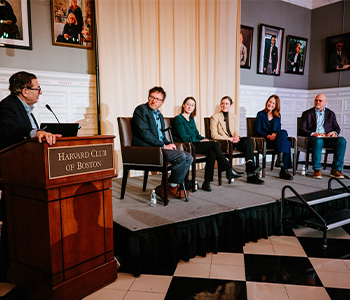
Sabine Wilhelm, PhD, second from right, participates in a February 2026 educational panel at the Harvard Club of Boston on AI and mental healthcare.
Photo by Emily Gardner
Supersized impact of philanthropy
“So much of our work this past year to develop and test new AI tools has been possible because of the generosity of donors,” says Dr. Wilhelm. “Philanthropy expedited our work and gave us the ability to respond quickly and follow new ideas.”
Paul English, a tech entrepreneur and philanthropist, recently made a $1 million gift to fuel the center’s work. Highly engaged with emerging tech trends, English is a co-founder of the travel website Kayak and a co-founder and partner of Boston Venture Studio, Inc., which creates consumer-focused websites, mobile applications, and AI applications.
“The ideas coming out of the Center for Digital Mental Health are brilliant, and I appreciate that Sabine and her team are pursuing these AI- and tech-powered ideas with such a high level of ethics and rigor,” English says. “Their work is so important in finding new ways to support everyone seeking mental healthcare — and to support care providers as well.”
To educate clinicians and researchers who can teach others, the center organizes in-person and virtual events, including guest speakers, panel discussions, and research forums on the local, national, and international level. An internship and fellowship program also trains the next generation of digital mental health experts. These efforts foster collaboration across disciplines and prepare a workforce that can thoughtfully develop, test, evaluate, and use digital tools and AI in ways that are ethical, effective, and grounded in science and clinical expertise.
“I don’t know of available grants for these far-reaching educational and capacity-building efforts, so we are truly grateful to our donors for enabling these opportunities,” says Dr. Wilhelm. “This multiplies our impact and advances ideas into real-world practice. Ultimately, we want to reduce barriers to care and make mental health solutions accessible to people all over the world.”
To learn more about supporting the Center for Digital Mental Health, contact Alex Dippold or visit the center’s website.