

Lydia Anderson will never forget the moment she unraveled the mystery of her son Raistlin’s illness. Raistlin was born with a rare malformation of the abdominal wall; his lungs were under-developed; his kidneys were damaged; and days after delivery, he was rushed into surgery to repair a fatal heart defect. After the procedure, doctors realized his pupils were fixed and dilated — and yet, newborn Raistlin was responsive. The care team at the Oklahoma hospital was baffled. Something tied these problems together, but what?
Days later, Lydia — a former cancer researcher — was sitting at Raistlin’s bedside in the cardiac ICU combing through scientific literature on her laptop when she stumbled on a study highlighting a rare genetic disorder called multisystemic smooth muscle dysfunction syndrome (MSMDS). Although there were only five known cases in the world, all of Raistlin’s symptoms matched up. Lydia knew in her heart she’d found the root cause of his problems, but the knowledge brought no comfort: the condition was so rare it was all but unknown.
“There was no cure, no WebMD, no Wikipedia entry, nothing,” Lydia says. “When you feel like you’ve reached the end of medical science, it’s the loneliest feeling in the world.”
But Lydia and her husband, Warren, refused to give up hope. Months later, after the diagnosis was confirmed by a genetic test, the hospital recommended they contact other medical centers in the hope that they could find a place that could help their son.
“Everybody we called said no,” she says. “Mass General said yes.”
Ultra-rare understanding
According to the World Health Organization, a rare disease is defined as one that affects fewer than 1 in 1,000 people. Since the advent of modern genomics, scientists have identified more than 9,000 of these diseases affecting as many as 400,000,000 people worldwide. The odds of having a child born with MSMDS are estimated to be roughly 1 in 1,000,000. To put that number in perspective, a person stands double the chance of being struck by lightning.
Mass General Brigham neurologist Patricia Musolino, MD, PhD, first encountered the disease as a neurocritical care fellow in 2012 when she was asked to review brain imaging of a 2-year-old girl with multiple, and seemingly unrelated, health problems. The MRI images revealed evidence of a stroke and many of the blood vessels appeared to be malformed.

“It was something I’d never seen before,” says Musolino, co-director of the Pediatric Stroke and Cerebrovascular Service at Mass General Brigham Neuroscience Institute.
It was only after genetic sequencing that Musolino and her colleagues had a diagnosis: MSMDS, which had been characterized less than two years earlier, in 2010.
Caused by a single genetic mutation in the ACT2A gene, MSMDS prevents the body’s involuntary or smooth muscle cells from contracting. This leads to problems in the body and brain vascular systems, digestive and urinary tracts, lungs and eyes. Due to unhealthy blood vessels, patients with MSMDS are at high risk of stroke and aortic aneurysm from an early age. Patients with the disease often require multiple surgeries and interventions during their lives, and few are known to survive childhood.
Moved by the urgent need and encouraged by parents looking for answers, Musolino started learning everything she could about the disease, and soon had a reputation as one of only a handful of experts. That reputation started attracting patients and soon Mass General Brigham had become a hub for the MSMDS community. Today, Musolino leads a multidisciplinary team of specialists trained to address the multiple systemic issues faced by patients with MSMDS. She also personally oversees the care of 40 children and adults with the disease — nearly half of all the known cases in the world.
“For many of our patients, coming to Mass General Brigham is the first time in their lives for these kids get to meet someone else that has the same condition,” she says. “This is a place where patients and families can feel understood and ask the questions that other providers are not able to answer.”
Relocating for Care
In 2018, shortly before his first birthday, Raistlin was transferred to Massachusetts General Hospital — and not a moment too soon. Unbeknownst to his Oklahoma care team, Raistlin had been in the early stages of pneumonia and shortly after arriving, he was rushed to the pediatric ICU where he would spend the next five months. Despite their worry, Warren and Lydia recall feeling relieved as they watched Musolino and the Mass General team rally around their son.
“We knew he had the best of the best, people who were willing to learn about him and from him to help him,” Warren says.
Early in Raistlin’s stay, pediatric pulmonologist Thomas Kinane, MD, approached Warren.
“He said, you won’t see me a lot, I’m going to be in the background, but I promise you he’ll have the very best care we can deliver,” Lydia says.
“Early research on rare disease like this is only possible through philanthropy and working together with patient families — but with their help we have unlocked the biggest hurdles to treating MSMDS.”
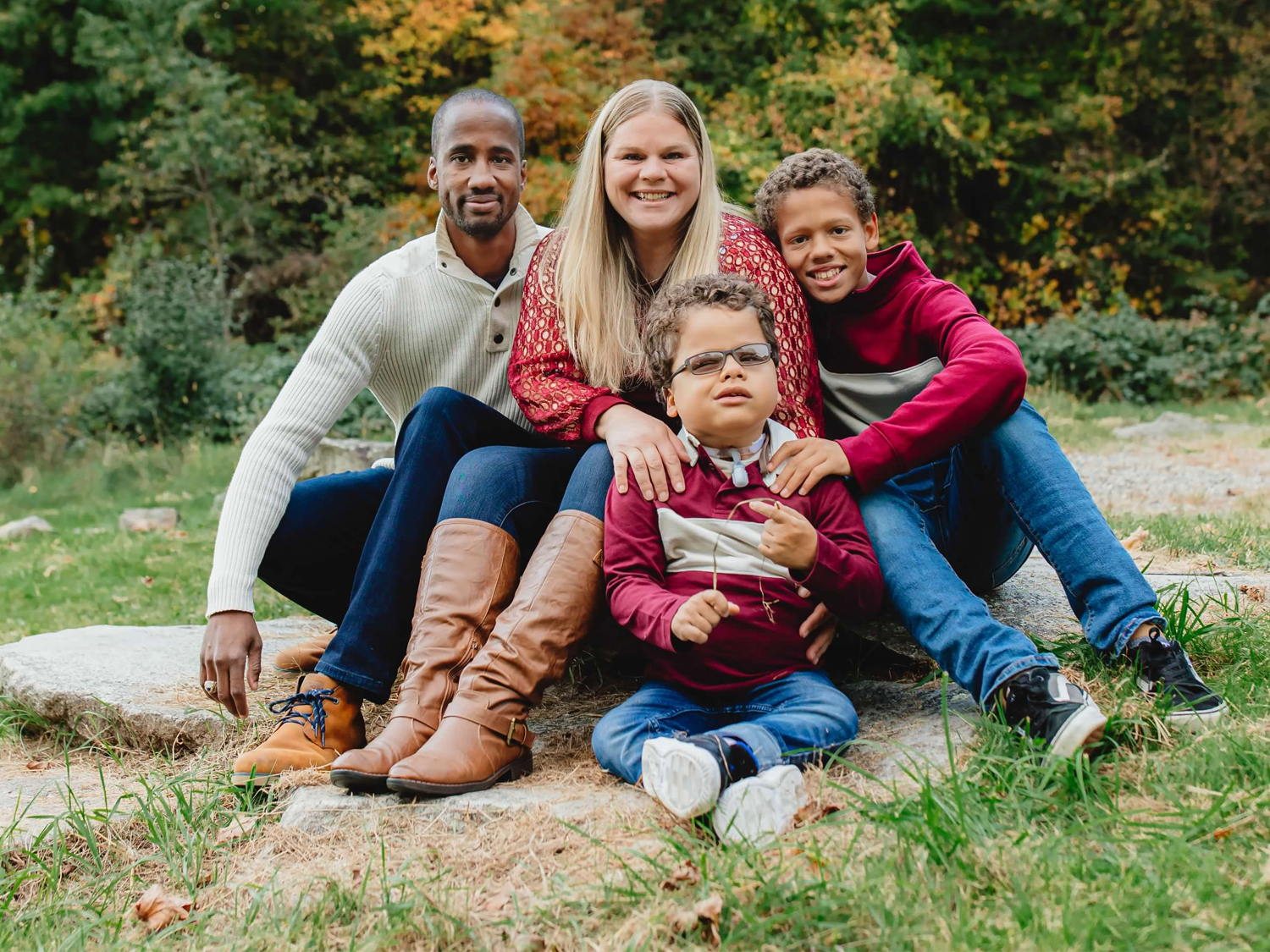
Today, 8-year-old Raistlin lives with his parents and his 12-year-old brother, Warrick, in Bedford, Massachusetts, where the family relocated to be closer to his care team. He is non-verbal (due to a tracheostomy to help alleviate his breathing issues) and has a full-time nurse to help manage his symptoms, but in other ways, he’s just a normal boy his age. He loves school and watching Bluey on his iPad and going to the park. He craves his independence and battles his brother for the TV remote.
“Raistlin has blossomed in ways a lot of people didn’t anticipate,” says Lydia.
In 2019, Lydia and Warren helped found the ACT2A Alliance, a patient support and advocacy group to help other parents of children like Raistlin get the answers they need.
“Because he’s so severely affected, people have learned a lot from him,” says Lydia. “He’s been an inspiration for so many.”
New therapy, new hope
Of the people inspired by Raistlin, one of the most significant may be Musolino. Following Raistlin’s arrival in 2018, Musolino connected at the bedside with pediatric cardiologist Mark Lindsay, MD, PhD, who had also studied the condition, and together they began building out a team of experts in clinical care, genetics, pathology, molecular biology, and drug design with one goal in mind: finding a cure. Now, eight years later, the team’s hard work is paying off.

“Early research on rare disease like this is only possible through philanthropy and working together with patient families — but with their help we have unlocked the biggest hurdles to treating MSMDS,” says Musolino.
She and her colleagues developed a gene therapy to correct the mutation in the ACT2A gene, thereby halting or possibly reversing the disease. In September 2025, they published the results of a study demonstrating that the gene therapy prolonged survival and reduced symptoms of vascular disease and neurodegeneration in mouse models of MSMDS. The team hopes with the support from families and the National Institutes of Health to start human clinical trials within two years. If the therapy proves effective in patients, it could have an impact well beyond MSMDS.
“Vascular disease is the number one cause of death and disability in the world,” says Musolino. “This could transform the ways we treat one of the biggest problems in healthcare.”
For Lydia and Warren, the news of a potential therapy is welcome, if somewhat bittersweet.
“The possibility of a therapy didn’t exist before Raistlin,” Lydia says. “But if we don’t make it to a treatment in time for him, we know he’s helped others. This isn’t a sad story. This is a story of hope.”
To learn more about how you can support rare disease research at Mass General Brigham Neuroscience Institute, contact us.
