


The first letter in the folder, dated December 21, 1987, opens as most of them do:
Dear Mr. and Mrs. Blum,
Thank you so much for your recent gift…
Signed by then Massachusetts General Hospital President Herbert Dane, the letter’s gracious, somewhat boilerplate language suggests a relationship in its infancy.
The last letter in the folder, dated September 20, 1993, is signed by Henry J. Mankin, MD, former chief of Mass General’s Orthopaedic Service, and closes with an almost familial warmth and affection:
Give my best to Eleanor, and thank you again. I look forward to seeing you soon. L’shanah tova!
Sincerely,
Henry
In between are 33 other letters from former Mass General leaders, all written to thank Maxwell and Eleanor Blum for their generosity. From 1987 to 1993, Maxwell V. Blum — the founder of the Maxwell Shoe Company — and his wife Eleanor donated to support a wide range of initiatives: Construction of the Lunder Building, establishing a clinical scholarship in cardiology and a fellowship in urology, and funding research in prostate cancer, melanoma, and orthopedics. For every physician who entered the couple’s orbit, it seemed a new gift soon followed.
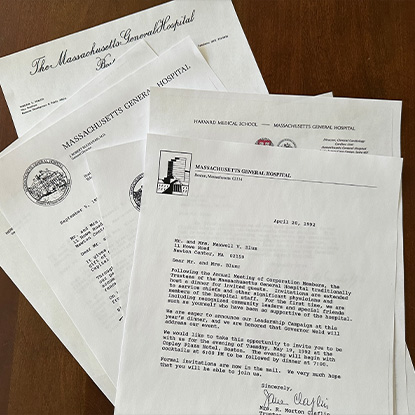
On the surface, the letters catalog one family’s burgeoning philanthropic and personal relationship with the hospital and doctors who cared for them. For Maxwell and Eleanor’s daughter Betty Ann, however, the letters are a powerful reminder of her parents’ commitment and determination to leave the world a better place.
“Our parents believed that if something good happens to you — if you are lucky, and even if it hurts — you’ve got a responsibility to give back,” Betty Ann says.
“It’s all right there,” says Betty Ann Blum, who recently discovered the folder of letters while digitizing some of her father’s old business papers. “This is who my parents were and this is who I want to emulate.”
Twenty-three years after her father’s death, and 13 after her mother’s, Betty Ann is still discovering the impact of her parents’ generosity and drawing inspiration from it as she carries on the family’s philanthropic legacy at Mass General Brigham.
Generational Giving
The letters chart the early years of the Blum family’s relationship with Mass General — the period leading up to the opening of the Maxwell & Eleanor Blum Patient and Family Learning Center in 1998.
“Our parents believed that if something good happens to you — if you are lucky, and even if it hurts — you’ve got a responsibility to give back,” Betty Ann says.
“I just love this hospital. I really do. Being involved here breathes life into me.”
And the Blums were lucky. As a young army private in WWII, Maxwell ‘Mutzie’ Blum survived a deadly explosion during the Battle of the Bulge. The small shoe wholesaling business he started in a Boston warehouse in 1949 grew to become one of world’s leading casual and dress footwear design, manufacturing and marketing companies. He, Eleanor and their daughters, Betty Ann and Marjorie, lived a comfortable life in Newton, surrounded by a community of friends and family who loved them. They gave accordingly: to local families in need, their synagogue, a wide range of charitable groups, and perhaps most significantly, to local healthcare institutions like Mass General.
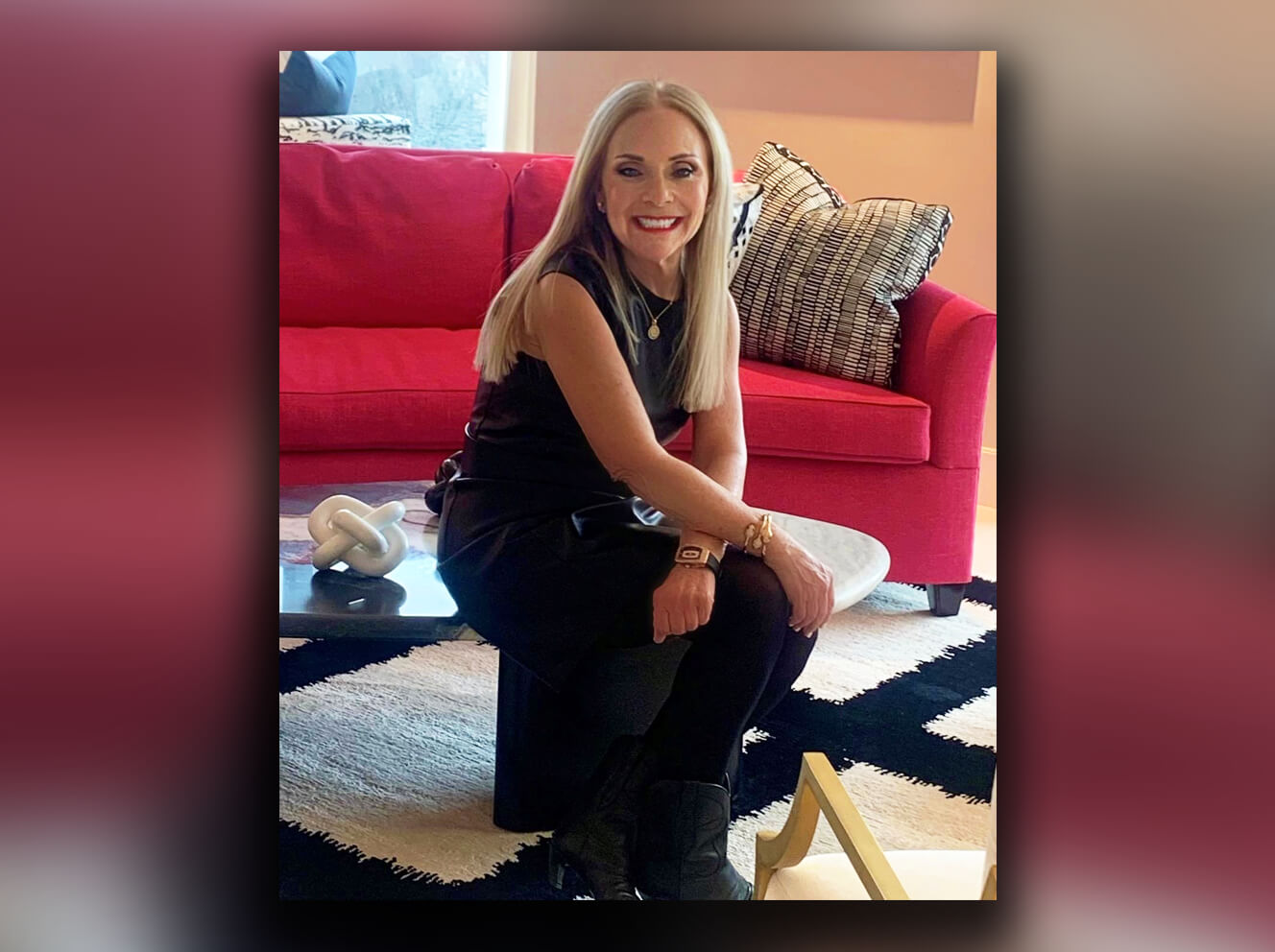
“It wasn’t like they were keeping secrets. They just didn’t need the kavod,” she says, before quickly adding “that’s Jewish for credit.”
“It could be $10 or $10,000, but they gave continually, gift after gift, and usually without anyone asking,” Betty Ann says.
Unsolicited Kindness
For Maxwell, giving without being asked was a point of pride and he was always on the lookout for opportunities. Indeed, one of the remarkable things about the letters is their overall tone, which might best be described as gleeful.
I recently received notice from David Buran that on September 18 you had once again contributed to the Orthopedic service. Needless to say, we are very pleased…
Once again, we are exceedingly grateful for your generosity and your gift…
Mr. Walch has shared with me your letter in which you announce your contribution to the Flow Cytometry Fellowship in orthopedic service; and I’m absolutely delighted.
“Dignity was so important to my father,” Betty Ann says. “He didn’t want people to feel self-conscious and have to ask, and he never refused anyone — even when he maybe should have.”
If dignity was important to Maxwell and Eleanor, recognition wasn’t. As evidenced by the letters, the Blums gave without expectation or requirement, asking nothing in return. In addition, they kept the details of their generosity to themselves. It wasn’t until after Maxwell’s death in 2003 that Betty Ann started to grasp the scale, scope and frequency of her parent’s giving, and the impact it had.
“How could I not want to follow in their footsteps?”
A Daughter’s Devotion
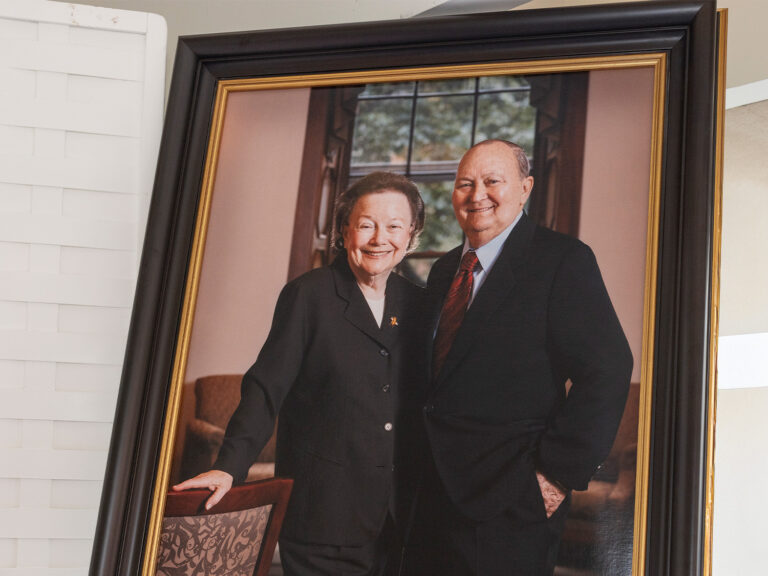
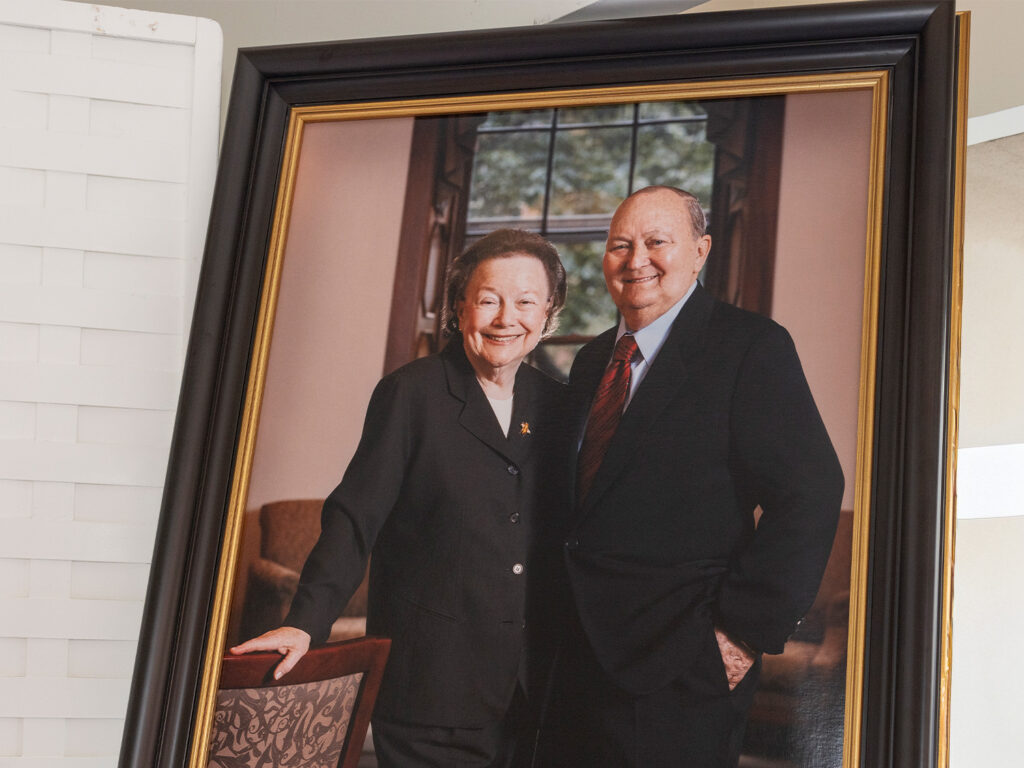
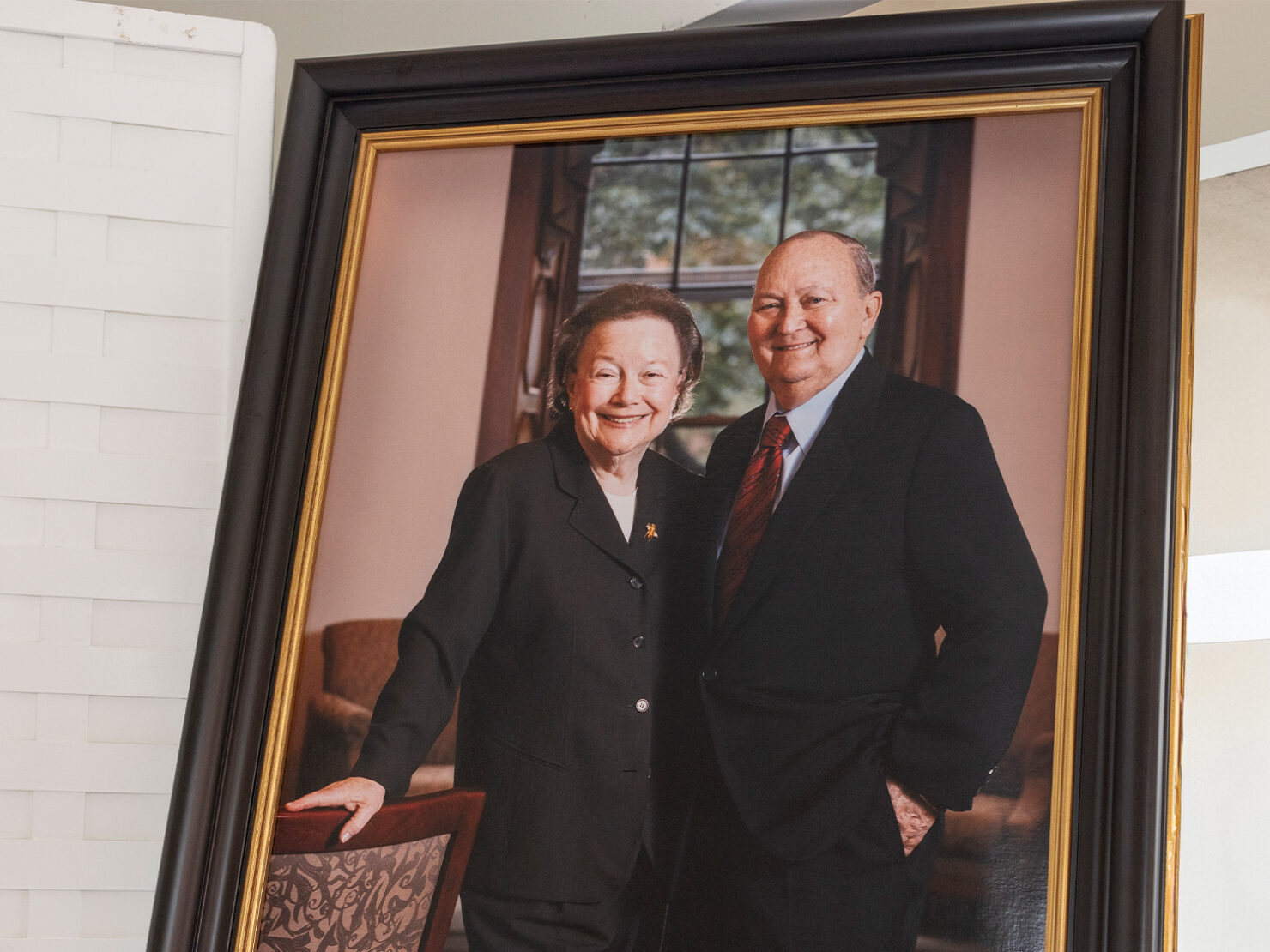
Inspired by their parents and their dedication to the Mass General community, Betty Ann and Marjorie started making gifts in their memory. Now, in addition to the Learning Center, there is the Maxwell V. Blum Cancer Resource Room, and Maxwell and Eleanor Blum floors in the Lunder and Yawkey Buildings. They also established two faculty chairs: the Blum Family Endowed Chair in Palliative Care in 2021 and the Blum Family Endowed Chair in Nursing and Patient Care Services in 2024. When the Philip and Susan Ragon Building opens in 2027, visitors to the ground-floor arcade will be greeted by the Maxwell and Eleanor Blum Grand Stair, the focal point of the space.
“It might seem contradictory to put their name on things, but for me, it’s about remembering,” Betty Ann says.
Beyond her philanthropy, Betty Ann has become an active member of the President’s Advisory Board. Despite having no background in healthcare, she has poured herself into the role — educating herself on hospital administration and the latest healthcare trends.
“I just love this hospital. I really do,” she says. “Being involved here breathes life into me.”
These days, it’s not unusual to see her walking the halls in her embroidered gray Mass General sweater, which she calls her “fashion staple,” or reading in the Blum Family Learning Center. From time to time, she says, she hears from patients — old friends or people that knew her family — who let her know that seeing the Blum name made them feel safe, confident, cared for.
“There is no greater pleasure than hearing that,” Betty Ann says. “My father had a quiet humility and sense of purpose, and I’m trying to live up to his example. When I’ve been moved to give, it’s never been about recognition. Seeing people benefit from what my family has shared, that’s reward enough.”
