

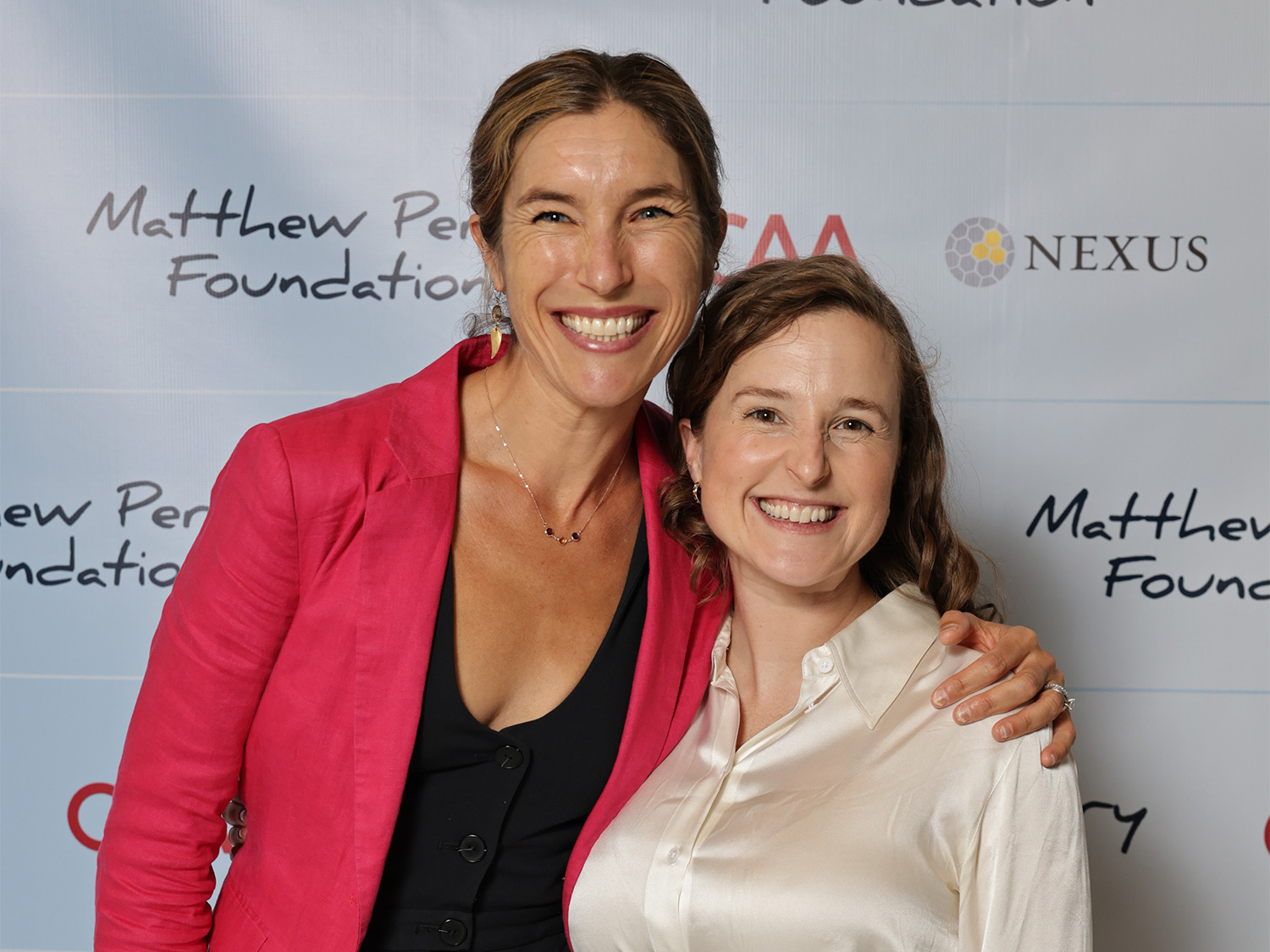

Sarah “SK” Kler, MD, has always been drawn to people with complicated lives. “I love working with people who have experienced really difficult things, who have real stories of resilience to tell,” she says.
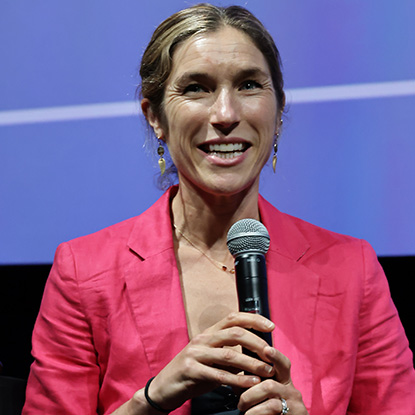
It is this passion that set her on the course she follows today as the inaugural recipient of the Matthew Perry Foundation Fellowship in Addiction Medicine, under the direction of Sarah Wakeman, MD, senior medical director of substance use disorder (SUD) at Mass General Brigham. The fellowship also marks a meaningful first for the Matthew Perry Foundation, the first time the organization has placed Matthew’s name on a formal program.
Through her work in clinics across Mass General Brigham and the city of Boston, Dr. Kler is aiming to make SUD treatment accessible to all. Her first exposure to SUD was growing up in a large family in Oregon in which some relatives battled addiction. Later, after college, she worked with people facing housing insecurity as a medical resident, an experience that taught her how often homelessness and substance use are intertwined. She also learned how to work well within interdisciplinary care teams to treat patients facing complex socioeconomic and medical conditions.
“I fundamentally believe that every person has the right to life and self-determination, regardless of their relationship to substances,” she says. “I feel so privileged to be able to help our patients achieve their goals in regards to substance use, to help them live the best possible version of their lives.”
Seeing the Whole Person
As the Matthew Perry Foundation Fellow in Addiction Medicine, Dr. Kler rotates through many different points of care on a weekly basis, including caring for patients who come to Mass General Brigham’s outpatient Bridge Clinic, which provides immediate assistance for SUD, and HOPE Clinic, which provides care for pregnant women and mothers with SUD. Dr. Kler also treats patients with SUD in the Emergency Departments and collaborates with Emergency Departments and collaborates on inpatient cases that require an expert in addiction medicine. In addition, she has partnered with Boston Health Care for the Homeless Program, doing street medicine and outreach across the city.
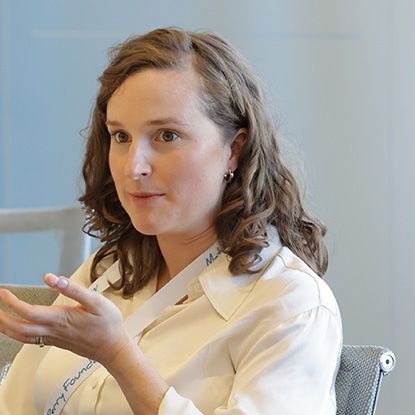
In tandem with her busy schedule of treating patients, Dr. Kler is also participating in Mass General Brigham’s Fellows as Teachers program, honing her skills in medical education and learning from her peers. She wants to eventually serve as an educational resource on addiction medicine for her colleagues and community.
“This is exactly why we’re so excited to be working with Dr. Kler,” says Lisa Kasteler-Calio, CEO of the Matthew Perry Foundation. “Investing in her isn’t just about supporting one fellow, it’s about the countless lives she will touch over the course of her career. With her commitment to patient care and her passion for teaching, we know her impact will extend far beyond her own practice, helping to grow the number of clinicians equipped to do this critical work at a moment when our country urgently needs it.”
“The clinicians, therapists, resource specialists, and recovery coaches I get to partner with are the most amazing people,” Dr. Kler says. “This work is truly a team effort, integrated into primary care, and prioritizes seeing each patient as their whole self. That’s what’s kept me coming back to it.”
Overcoming Barriers to Care
Dr. Kler hopes to reach beyond the patients she treats directly by helping to eliminate barriers to care for all SUD patients. Some of these major barriers include discrimination against those struggling with addiction, lack of insurance coverage, distrust of the medical community (often based on medical trauma), difficulty accessing transportation to clinics, immigration status, medical stigmatization, and minimal public funding to tackle these issues in a hospital setting.
As Dr. Wakeman explains, addiction is the only illness where a presenting symptom, like using a substance, may lead a person to being “kicked out” of treatment — this reality prevails because a majority of SUD treatment takes place outside of hospitals, without the medical expertise it truly requires.
“These are treatable conditions with good prognoses, when evidence-based treatment strategies are applied. Oftentimes, that doesn’t align with public perception of addiction,” says Dr. Wakeman.
Treatments for SUD like the medications buprenorphine and methadone are frequently stigmatized, and patients are incorrectly blamed for their disease. Dr. Kler compares the compassionate care model for type 2 diabetes versus SUD as an example. When patients with diabetes encounter difficulties adhering to medical guidance, they are still treated without judgement and with full access to their necessary medications. There are no consequences or punishment. The same, she says, should be true for patients with SUD.
“When I am taking care of a primary care patient, I can reach out to my colleagues in endocrinology when I need expertise on a patient case involving diabetes, and that same model is needed for substance use disorder,” Dr. Wakeman adds. This is what Drs. Wakeman and Kler, and collaborators and strategic funders like the Matthew Perry Foundation, are striving for — a well-supported, improved infrastructure within healthcare systems to support patients with SUD.
Training the Next Generation
When addiction medicine was finally recognized as a medical subspecialty in 2016, in part to address the growing need for patient care in this area, there was no increase in funding to match. This left leaders like Dr. Wakeman to secure private funding from organizations such as the Matthew Perry Foundation to establish their own training initiatives to prepare the next generation of addiction medicine experts.
Now, thanks to that funding, future leaders like Dr. Kler are receiving the robust and complex on-the-job training they need to succeed and make a difference.
“Private funding like that provided by the Matthew Perry Foundation allows us to be creative and collaborate with our communities to make care accessible in ways that are actually impactful for them,” Dr. Kler says. “Because of this Fellowship, I am able to gain knowledge and experiences free of the constraints that often come with public funding, allowing me to serve as a resource on addiction medicine throughout my career.”
To learn more about how you can support addiction medicine at Mass General Brigham,contact us.