
There is a global crisis in brain health. According to recent data, brain diseases, such as stroke, migraine, and dementia, are now the leading cause of illness and disability worldwide, affecting 1 in every 3 people. Research also shows that these conditions take a heavier toll on groups with unmet service needs and certain geographic populations. To alleviate this crisis and reduce disparities in brain health, new methods and strategies are needed.
“Integrating simple preventive practices into our daily lives will have a catalytic effect on global brain health.”
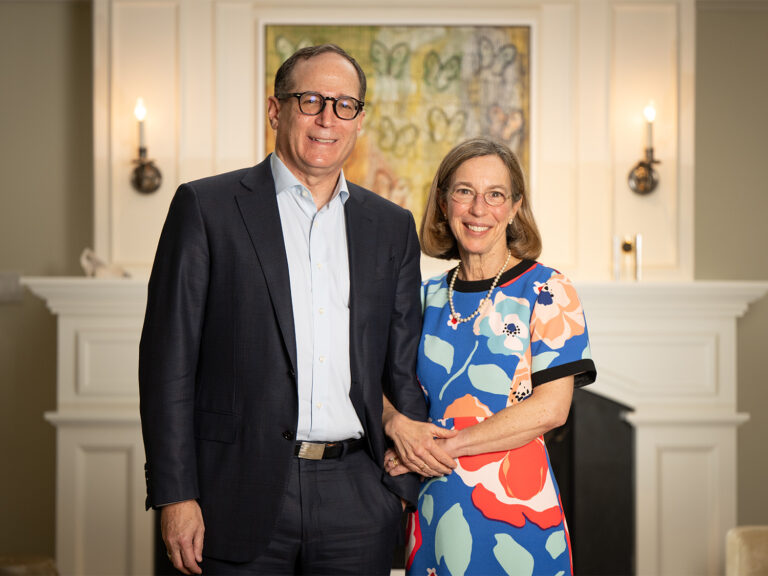
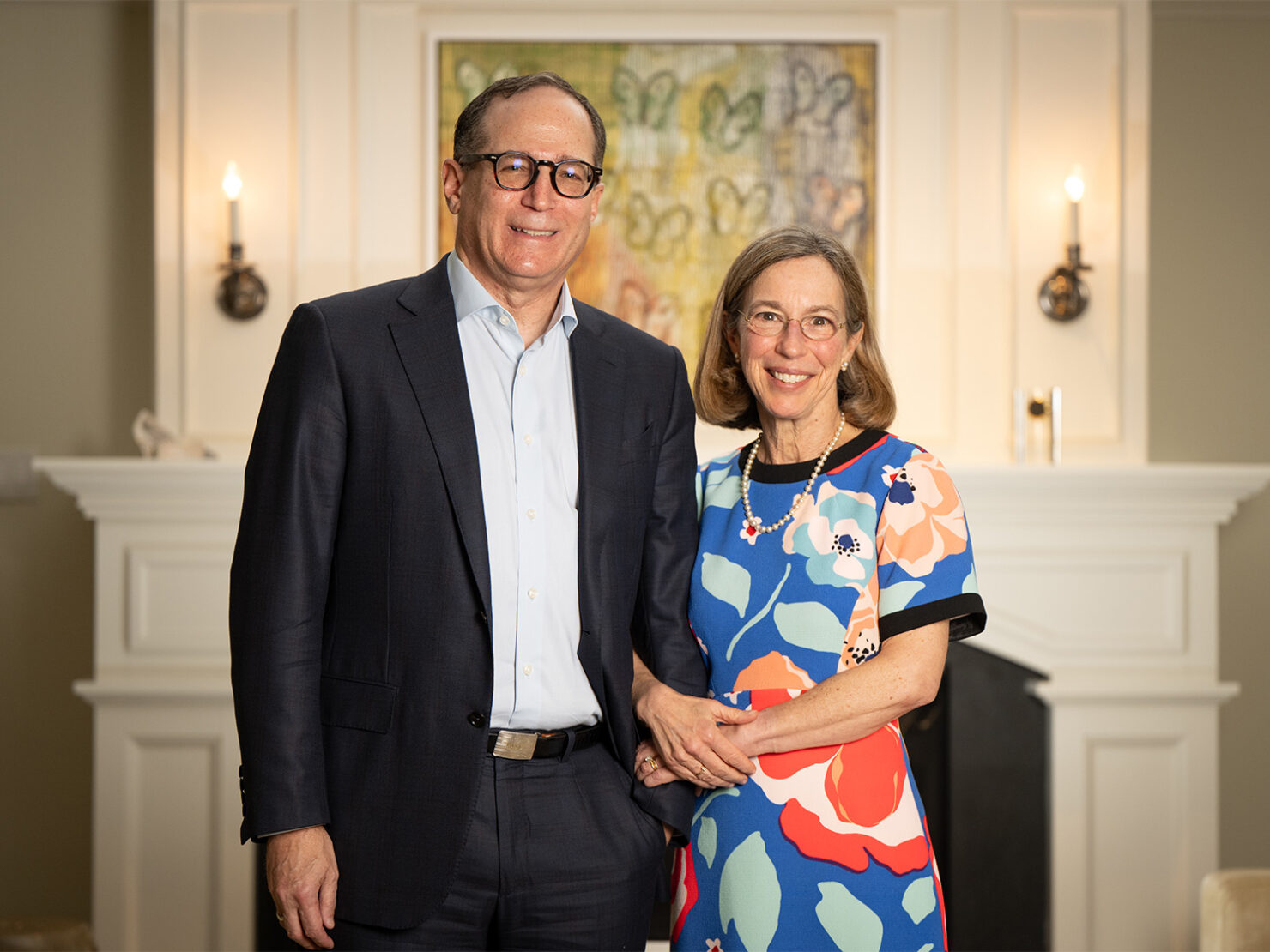
For more than 150 years, Mass General Brigham has been committed to advancing neuroscience through care, research, education, and community engagement. Now, with the help of a visionary $30 million gift from philanthropists Jeannie and Jonathan Lavine, Mass General Brigham is investing in a new holistic, community-based, and preventive approach to brain health.
“Healthcare is a fundamental human right, and it’s not evenly distributed — especially when it comes to the brain,” says Jeannie Lavine. “Jonathan and I believe strongly in leveling the playing field, and we’re hopeful our gift can benefit patients everywhere.”
At the heart of the gift are two boundary-pushing efforts to transform brain health and well-being for patients in Boston and around the world: a new global brain disease prevention initiative led by Jonathan Rosand, MD, MSc, co-founder of the McCance Center for Brain Health and the J.P. Kistler Endowed Chair in Neurology; and renewed support for an innovative initiative aimed at helping people with migraine, led by Carolyn Bernstein, MD, the Lavine Family Endowed Chair in Neurology.
“MGB is a singular organization, unparalleled in the world, and we’ve been so fortunate to benefit from the care they provide,” says Jonathan Lavine. “Carrie Bernstein and Jonathan Rosand are the embodiment of the kind of empathetic problem-solving that makes this institution so special.”
“With this incredible support of the Lavine family, we will be able to create a sustainable, integrated neurology program designed to meet the needs of migraine patients, and advance discovery in complementary and integrative treatment approaches.”
The Lavine family has also designated funds to create a reflection room, designed to support the emotional well-being of patients in Mass General Brigham’s new Phillip and Susan Ragon Building, and for unrestricted use.
Prescribing prevention
Experts estimate that 45% of dementia cases, including Alzheimer’s disease, 75% of strokes, and more than 35% of depression cases are attributable to simple, modifiable risk factors. Yet most brain diseases are diagnosed and treated only after symptoms appear. Dr. Rosand has devoted his career to cutting-edge genomics, stroke, and neurocritical care. Over the past decade, he and his team have shifted their focus from treatment to prevention. They are now working with patients, families, and impacted communities to develop tools to help people integrate lessons from the latest brain health science into their daily lives. This approach led to the establishment of the Global Brain Care Coalition, an assembly of clinical, community, public health, and research pioneers dedicated to advancing brain health science and making sure it is available to everyone, everywhere.
“There is a ton of money chasing the next Alzheimer’s drug, but the impact of lifestyle on brain health is largely overlooked — Jonathan Rosand is changing that,” says Jeannie Lavine.
The Lavine Family Brain Disease Prevention Initiative will enable Dr. Rosand to amplify his efforts through the creation of the Brain Care Labs. This new space will function as a research and training hub for the Global Brain Care Coalition. The initiative also provides funding to support the recruitment and training of clinicians and staff, the design and rollout of a digital platform and app to support patients and advance research, and an AI-powered data hub to track global outcomes.
“Our team and our colleagues from around the world have discovered that a set of daily lifestyle choices not only reduce our risk of dementia, stroke, and depression, they also protect us from heart disease and many forms of cancer. Integrating simple preventive practices into our daily lives will have a catalytic effect on global brain health,” Dr. Rosand says. “This tremendous recognition and support from the Lavine family will propel this important work and change the lives of millions.”
Mitigating migraine
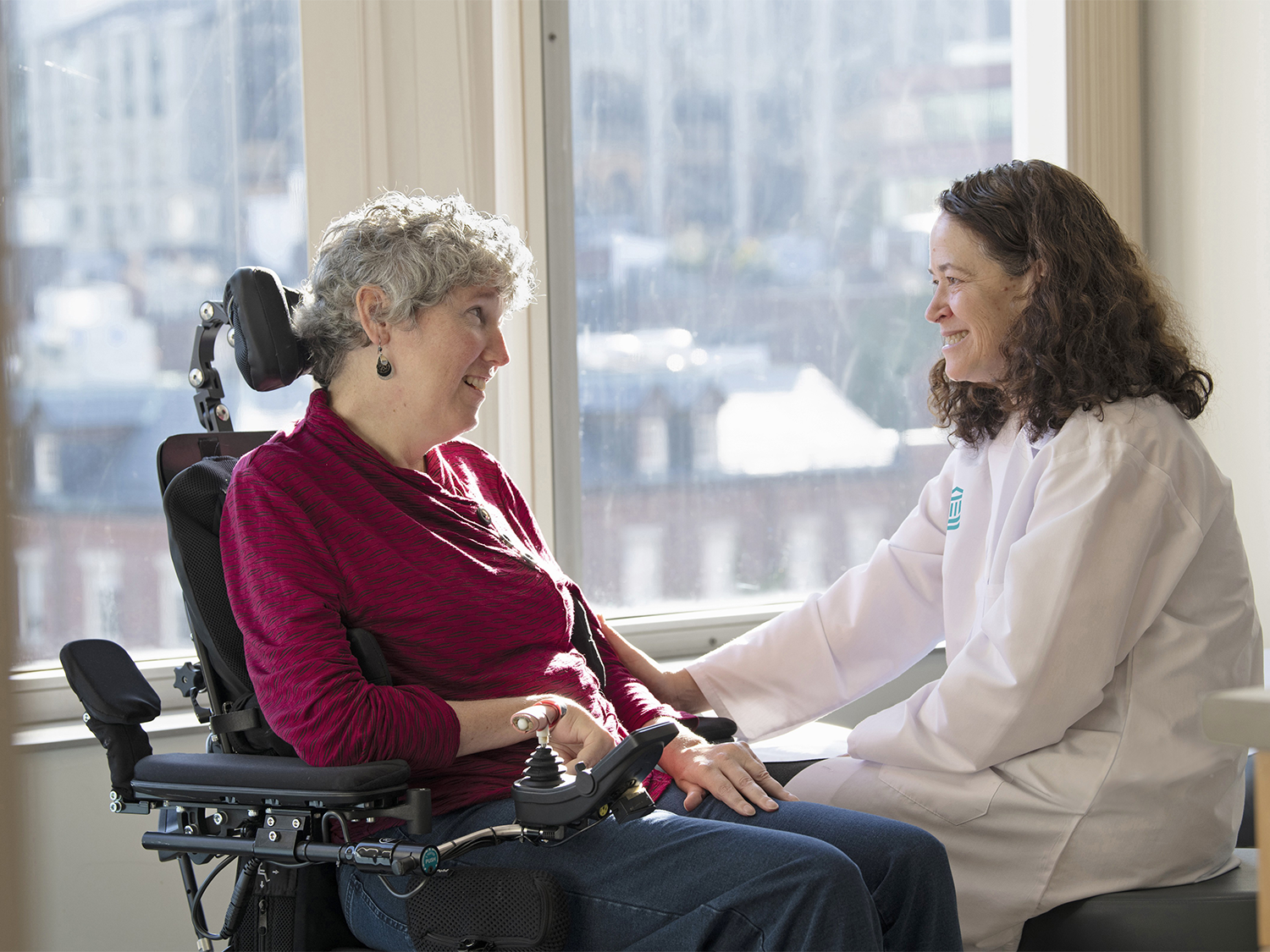
Migraine is one of the most common neurologic disorders, affecting more than 1 billion people globally. Despite this ubiquity, migraine is still often overlooked and misunderstood. Dr. Bernstein has been instrumental in pioneering an integrative approach to migraine care that incorporates complementary interventions such as exercise, meditation, and acupuncture.
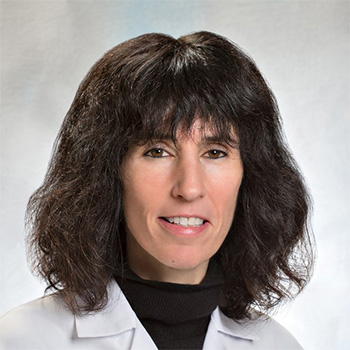
“Migraines are a bit of a riddle — you can’t just run a test and prescribe a treatment,” says Jonathan Lavine, a longtime sufferer of migraines. “Dr. Bernstein’s approach has changed my life, and we’re proud to support her.”
With renewed support from the Lavine family, Dr. Bernstein is poised to expand her current research, pursue new lines of inquiry, and — through clinical trials — increase patient access to evidence-based integrative treatments, such as virtual reality. The funding will also support the creation of a new early-career faculty award, the expansion of existing educational initiatives for patients and caregivers, and the establishment of a fund to bring science education to low-resourced schools in the Boston area.
“With this incredible support of the Lavine family, we will be able to create a sustainable, integrated neurology program designed to meet the needs of migraine patients, and advance discovery in complementary and integrative treatment approaches,” Dr. Bernstein says.
Supporting a unified vision
The Lavine gift is also notable for being among the first major philanthropic gifts directed at Mass General Brigham’s now-unified academic medical centers — Massachusetts General Hospital and Brigham and Women’s Hospital. For the Lavine family, who have made past contributions to both hospitals, the decision to support neurology across the system was simple.
“We are so fortunate to have these two trusted institutions right here in our own backyard,” says Jeannie Lavine. “By collaborating rather than competing, these brilliant physician-scientists can change the lives of patients and families all over the world.”
“By investing in our vision of a fully integrated health system centered around patients, the Lavine family is helping us leverage our innovative, multidisciplinary expertise and deliver a new, holistic model of preventive care to patients around the world,” says David F. M. Brown, MD, president of Academic Medical Centers at Mass General Brigham. “This transformative gift matches the transformative moment for our enterprise, and we are deeply grateful.”
To learn more about how you can support the Mass General Brigham Neuroscience Institute, contact us.